Pori
- CeraVe Moisturizing Cream is the best barrier repair cream overall: ceramides, cholesterol and petrolatum for $17.99 per 16 fl oz.
- La Roche-Posay Cicaplast Balm B5 suits raw, irritated patches; Aquaphor Healing Ointment seals cracked spots and lips.
- Vanicream Daily Facial Moisturizer is the gentlest for sensitive faces; La Roche-Posay Toleriane Double Repair suits oily skin.
- Pause acids and retinoids, apply cream to damp skin, and see a dermatologist if itching or rash lasts beyond two weeks.
The best barrier repair cream for most people is CeraVe Moisturizing Cream, which pairs three ceramides with petrolatum and costs $17.99 for 16 fl oz at Target. La Roche-Posay Cicaplast Balm B5 is the pick for raw, irritated patches, Aquaphor Healing Ointment is the strongest seal for cracked spots, and Vanicream Daily Facial Moisturizer is the gentlest option for sensitive faces. For oily or combination skin, La Roche-Posay Toleriane Double Repair repairs without the weight.
Before you buy, you can scan a cream's barcode or photograph its label with the ingredient scanner in Pori to check it against your skin type and flag fragrance, acids or lanolin. Pori reads the label for you; it does not diagnose skin conditions.
Quick picks
- Best overall: CeraVe Moisturizing Cream ($17.99 for 16 fl oz, Target): three ceramides, cholesterol, hyaluronic acid and petrolatum, fragrance-free.
- Best for irritated, raw patches: La Roche-Posay Cicaplast Balm B5 ($32.99 for 3.38 fl oz, Target): panthenol, shea butter, madecassoside and glycerin, fragrance-free.
- Best ointment for cracked skin: Aquaphor Healing Ointment ($6.29 for 1.75 oz, Target): 41% petrolatum with panthenol and glycerin.
- Best for sensitive faces: Vanicream Daily Facial Moisturizer ($13.99 for 3 fl oz, Target): five ceramides, squalane and phytosterols, no fragrance or botanicals.
- Best lightweight: La Roche-Posay Toleriane Double Repair Face Moisturizer (from $11.49, Target): ceramide NP and niacinamide in an oil-free lotion.
- Best budget petrolatum cream: Vanicream Moisturizing Cream ($13.19 for 16 oz, Target): petrolatum second on a ten-ingredient list.
We compared published ingredient lists, brand claims and listed prices; we did not test these products on skin. Prices are Target's US prices as of November 2026 and change often. A barrier cream helps skin hold water while it recovers. If you have eczema, a rash that spreads or skin that cracks and bleeds, see a dermatologist.
How do the best barrier repair creams compare?
| Cream | Key ingredients | Skin type | Price (November 2026) |
|---|---|---|---|
| CeraVe Moisturizing Cream | Ceramides NP, AP, EOP, cholesterol, hyaluronic acid, petrolatum, dimethicone | Normal to very dry, face and body | $17.99 for 16 fl oz (Target) |
| La Roche-Posay Cicaplast Balm B5 | Panthenol, shea butter, glycerin, dimethicone, madecassoside, centella | Dry, irritated or post-procedure skin | $32.99 for 3.38 fl oz (Target) |
| Aquaphor Healing Ointment | Petrolatum 41%, mineral oil, lanolin alcohols, panthenol, glycerin, bisabolol | Cracked or chapped spots, lips | $6.29 for 1.75 oz (Target) |
| Vanicream Daily Facial Moisturizer | Squalane, glycerin, hyaluronic acid, five ceramides, phytosterols | Sensitive skin, any type | $13.99 for 3 fl oz (Target) |
| La Roche-Posay Toleriane Double Repair Face Moisturizer | Glycerin, squalane, niacinamide, ceramide NP | Oily, combination, sensitive | From $11.49 for 1.35 fl oz (Target) |
| Vanicream Moisturizing Cream | Petrolatum, sorbitol, cetearyl alcohol | Very dry or eczema-prone, face and body | $13.19 for 16 oz (Target) |
What makes a cream good for barrier repair?
Your outer skin layer is held together by three kinds of fat: ceramides, cholesterol and fatty acids. When they run low, water escapes and irritants get in, which is why a damaged skin barrier stings, flakes and feels tight. A barrier cream works in one or more of three ways:
- It replaces the missing lipids. Studies by Man, Elias and colleagues, mostly in mice with early results in human skin, found that ceramides, cholesterol and fatty acids work best together; applying one or two alone delayed barrier recovery. That is why a ceramide cream that also lists cholesterol and fatty acids is the better bet. Our ceramides guide explains how to read the label.
- It seals water in. Petrolatum is the strongest common occlusive: a dermatology review notes that at 5% or more it cuts water loss through the skin by more than 98%, against 20% to 30% for lanolin, mineral oil and silicones.
- It soothes and draws water in. Panthenol, or provitamin B5, improves skin hydration and reduces water loss, and helps irritated skin recover. Glycerin does the hydrating in nearly every cream here.
Just as important is what a barrier cream leaves out: fragrance, essential oils, drying alcohol and exfoliating acids. Every pick here is free of all four.
Which barrier repair creams are best?
CeraVe Moisturizing Cream: best overall
CeraVe says this cream combines three essential ceramides, hyaluronic acid, dimethicone and petrolatum to help restore the skin's protective barrier. The full list also includes cholesterol, so it covers both the lipid and the seal approach in one jar. It is fragrance-free, non-comedogenic, accepted by the National Eczema Association and suitable from age 3. Target had the 16 fl oz pump at $17.99.
Who it suits: dry, tight or over-exfoliated skin on the face and body. Who should skip it: very oily skin, which may prefer the lighter Toleriane below. The catch: the ceramides sit after the base ingredients, as they do in most creams, so the petrolatum and glycerin do much of the work. Our CeraVe Moisturizing Cream review goes line by line.
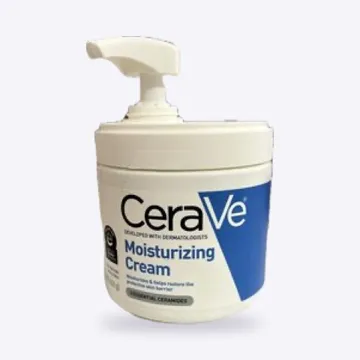
Moisturizing Cream
Thick ceramide cream for skin that dries out by midday.
Suits: Dry, Normal, Sensitive skin
From Pori's catalogue. Amazon links carry our Associates tag: Pori earns from qualifying purchases, at no cost to you. No brand pays to be listed. Photos: Open Beauty Facts contributors, CC BY-SA 3.0.
La Roche-Posay Cicaplast Balm B5: best for irritated, raw patches
Cicaplast is made for dry, irritated skin, and the listing says it suits skin after some procedures. In the US it is sold as an over-the-counter skin protectant with dimethicone 1% as the active ingredient. Our Cicaplast Balm B5 review goes through the full label. Target's listing gives the full ingredient list: water, hydrogenated polyisobutene, dimethicone, glycerin, shea butter and panthenol lead, with centella asiatica extract, madecassoside and zinc, copper and manganese further down. A La Roche-Posay answer on the listing gives 5% panthenol, and the listing says it is fragrance-free and accepted by the National Eczema Association, and that it can be used on face, body, hands and lips. Target lists the 3.38 fl oz tube at $32.99; the 1.35 oz travel tube was on sale for $13.69.
Who it suits: red, dry, chapped or post-procedure skin, and cracked corners of the nose or mouth. Who should skip it: people on a tight budget, since it is the priciest pick per ounce. The catch: it is thick and can pill under makeup; some Target reviewers say the newer formula feels different from the old one. Do not use it on broken skin.
Aquaphor Healing Ointment: best ointment for cracked skin
Aquaphor is an over-the-counter skin protectant. Its drug label lists petrolatum 41% as the active ingredient, with mineral oil, ceresin, lanolin alcohols, panthenol, glycerin and bisabolol. The label's uses include chapped or cracked skin and lips and protection from wind and cold. Aquaphor says it is free of preservatives and fragrance. Target had the 1.75 oz tube at $6.29.
Who it suits: cracked patches, chapped lips, the skin around the nose during a cold, and as a thin last layer at night over a ceramide cream. Who should skip it: anyone allergic to lanolin, a known contact allergen. The catch: it is greasy, so most people use it on spots rather than the whole face. If you are acne-prone and curious about "slugging," read our guide to petrolatum and acne first. Plain petroleum jelly does the same sealing job without the lanolin; the American Academy of Dermatology suggests it to relieve dry skin, including lips and eyelids, applied to damp skin.
Vanicream Daily Facial Moisturizer: best for sensitive faces
When skin reacts to almost everything, fewer ingredients help. Vanicream's list is water, squalane, glycerin and a few emulsifiers, then hyaluronic acid, five ceramides, carnosine and phytosterols. There is no fragrance, botanical extract or essential oil, and it has the National Eczema Association seal. Target had it at $13.99 for 3 fl oz.
Who it suits: sensitive, eczema-prone or rosacea-prone faces, and anyone rebuilding after over-exfoliating. Who should skip it: very dry skin that needs petrolatum; add a thin layer of ointment at night. The catch: it is a light lotion, so in winter it may not be enough on its own.
La Roche-Posay Toleriane Double Repair Face Moisturizer: best lightweight
Barrier damage happens to oily skin too, often from acne treatments. This lotion lists glycerin, squalane, dimethicone and niacinamide near the top and ceramide NP further down, per Target's ingredient list. It is oil-free, fragrance-free and non-comedogenic. Target sells the 1.35 fl oz size at $11.49 and the 3.38 fl oz size for up to $24.99.
Who it suits: oily, combination or acne-prone skin that stings from retinoids or benzoyl peroxide. Who should skip it: very dry skin. The catch: it has no petrolatum, so it seals less than the creams above.
Vanicream Moisturizing Cream: best budget petrolatum cream
Vanicream's original cream has a ten-ingredient list: water, petrolatum, sorbitol, cetearyl alcohol, propylene glycol, ceteareth-20, simethicone, glyceryl stearate, PEG-30 stearate and sorbic acid. Vanicream says it is non-comedogenic, can be used on the face and carries the National Eczema Association seal. Target had the 16 oz jar at $13.19.
Who it suits: very dry or eczema-prone skin, families, and anyone who wants a cheap, plain cream for face and body. Who should skip it: people who want ceramides in the formula. The catch: it contains propylene glycol, which bothers a small number of people with very sensitive skin.
How do you use a barrier cream to repair your skin?
- Pause exfoliating acids, scrubs and retinoids until the stinging stops.
- Wash with a gentle, fragrance-free cleanser and lukewarm water; our sensitive skin cleanser picks fit here.
- Apply the cream to slightly damp skin within a few minutes of washing.
- On very dry nights, add a thin layer of ointment over the cream on the driest spots.
- Wear sunscreen by day; mineral formulas tend to sting less.
The barrier starts rebuilding within hours, but full recovery from long-running damage can take weeks to months; our damaged skin barrier guide has a week-by-week schedule. If your skin itches badly, weeps or does not improve in two weeks, it may be eczema or contact dermatitis, which a dermatologist can treat. Our face wash for eczema roundup covers cleansing with eczema.
How we chose
We looked for creams and ointments sold in the US that contain at least one of the barrier ingredients with clinical support: ceramides with cholesterol, petrolatum or panthenol. We left out anything with added fragrance, essential oils, drying alcohol or exfoliating acids, and checked each brand's published ingredient list or US drug label. Prices are from Target in November 2026. We did not wear-test any product. For more options, see our best moisturizer for sensitive skin and best moisturizer for dry skin roundups, the guide to panthenol, and our moisturizers for sensitive skin catalogue.
Frequently asked questions
What is the best cream to repair the skin barrier?
CeraVe Moisturizing Cream is our best overall pick. It combines three ceramides and cholesterol with petrolatum and hyaluronic acid, is fragrance-free and costs $17.99 for 16 fl oz at Target.
Are ceramides or petrolatum better for a damaged barrier?
They do different jobs. Ceramides, ideally with cholesterol and fatty acids, top up the lipids in your outer skin layer, while petrolatum seals water in. A cream with both, such as CeraVe Moisturizing Cream, covers both.
Is Cicaplast Balm B5 good for the skin barrier?
It is a good choice for dry, irritated or chapped skin. It contains panthenol, shea butter, glycerin and madecassoside and is fragrance-free. It is thick, so many people use it on patches or at night.
Can I use Aquaphor on my face?
Yes, on dry or cracked spots, as a thin layer. It contains lanolin alcohols, so skip it if you are allergic to lanolin, and use it sparingly if you are acne-prone.
How long does it take to repair a damaged skin barrier?
The barrier starts rebuilding within hours once you stop irritants and moisturize, but full recovery from long-running damage can take weeks to months. See a dermatologist if your skin does not improve in two weeks or the rash spreads.
Should I stop using retinol if my skin barrier is damaged?
Yes, pause retinol, exfoliating acids and scrubs until the stinging and flaking stop, then restart slowly, a few nights a week.
Sources
- Man et al. Optimization of physiological lipid mixtures for barrier repair (Journal of Investigative Dermatology, 1996)
- Sethi et al. Moisturizers: the slippery road (Indian Journal of Dermatology, 2016)
- Ebner et al. Topical use of dexpanthenol in skin disorders (2002)
- American Academy of Dermatology: Petroleum jelly for skin care
- CeraVe: Moisturizing Cream
- DailyMed: Aquaphor Healing (petrolatum) ointment label
- Target: La Roche-Posay Cicaplast B5 Soothing Therapeutic Multi-Purpose Cream
- Vanicream: Daily Facial Moisturizer
- Vanicream: Moisturizing Cream
Pori is a wellness and skincare education app, not a medical device. This article is for general information and isn't medical advice. For anything that worries you, see a dermatologist.