Pori

- Acanthosis nigricans is dark, thick, velvety skin in folds such as the back of the neck, armpits and groin.
- It is most often linked to insulin resistance and can be the first sign of prediabetes or type 2 diabetes, so ask your doctor for a blood sugar test.
- Other causes include some medicines, PCOS and genetics; a rare sudden, widespread form is linked to cancer and needs prompt review.
- It fades slowly when the cause is treated; exfoliating acids, retinoids or laser can soften it, but scrubbing does not help.
Acanthosis nigricans is darker, thicker, velvety skin in body folds and creases, most often on the back and sides of the neck, the armpits and the groin. It most often goes with insulin resistance and can be the first visible sign of prediabetes or type 2 diabetes. It does not wash off, and it is a reason to ask your doctor for a blood sugar test, whatever it looks like.
Pori does not diagnose skin conditions. Its selfie scans and photo diary can help you keep dated, consistent photos to show your doctor and to see whether the patches fade once the cause is treated.
What does acanthosis nigricans look like?
MedlinePlus, the National Library of Medicine's health site, describes it as darker, thick, velvety skin in body folds and creases. It usually appears slowly and causes no symptoms other than the change in the skin. The American Academy of Dermatology (AAD) describes a dark patch (or band) of velvety skin, often on the back of the neck.
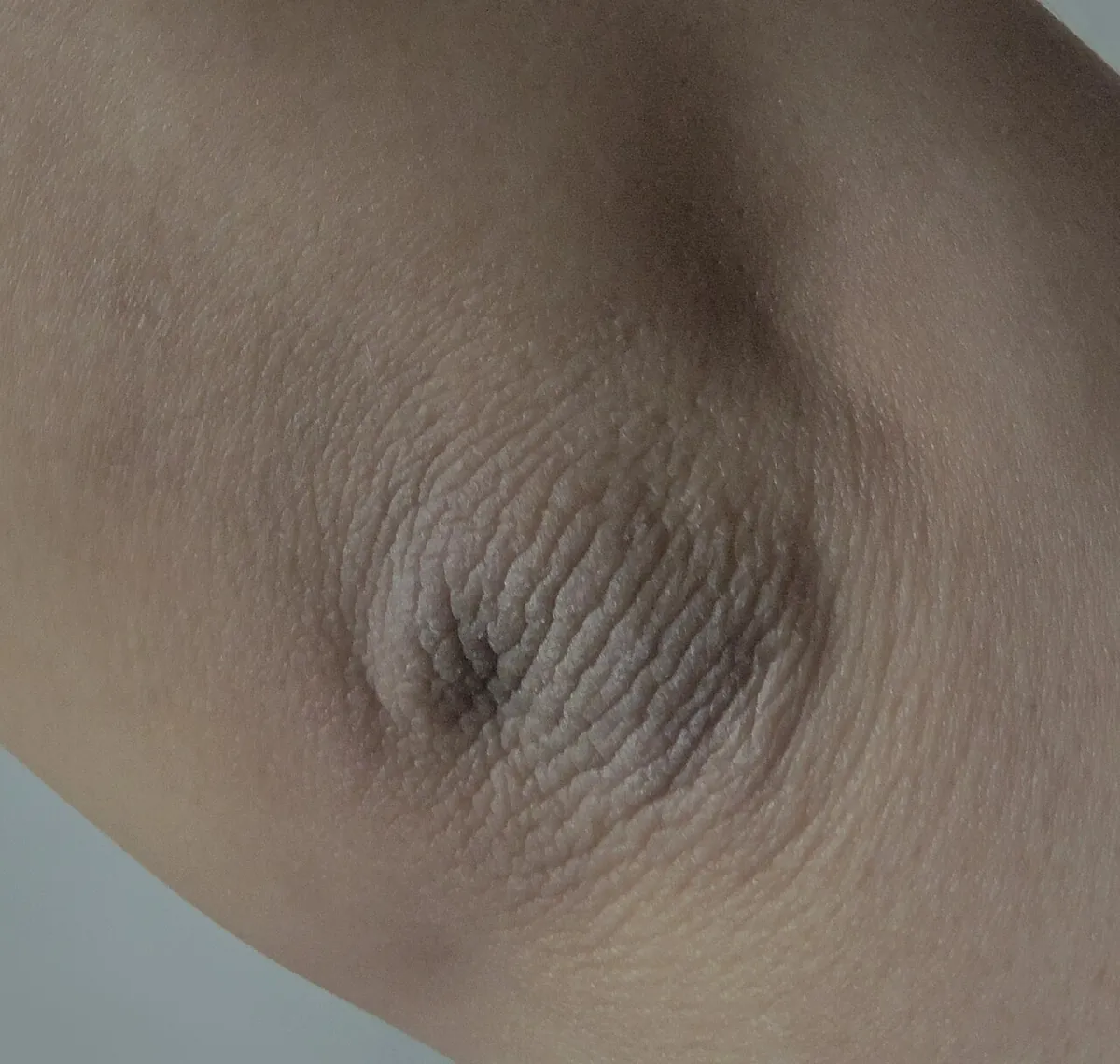
- Color: grey-brown to dark brown or almost black, darker than the skin around it.
- Texture: velvety or slightly raised, with deeper skin lines. It can feel rough over the knuckles and elbows.
- Where: the neck, armpits and groin most often, and also over the finger and toe joints, elbows and knees. MedlinePlus notes that the lips, palms or soles can be involved, which is more common in people with cancer.
- Extras: skin tags often sit in or near the patches, and DermNet notes that patches in folds can become soggy and smell.
People often think it is dirt or a tan line and scrub it. Scrubbing does not remove it and can irritate the skin, which on brown skin can leave extra dark marks.
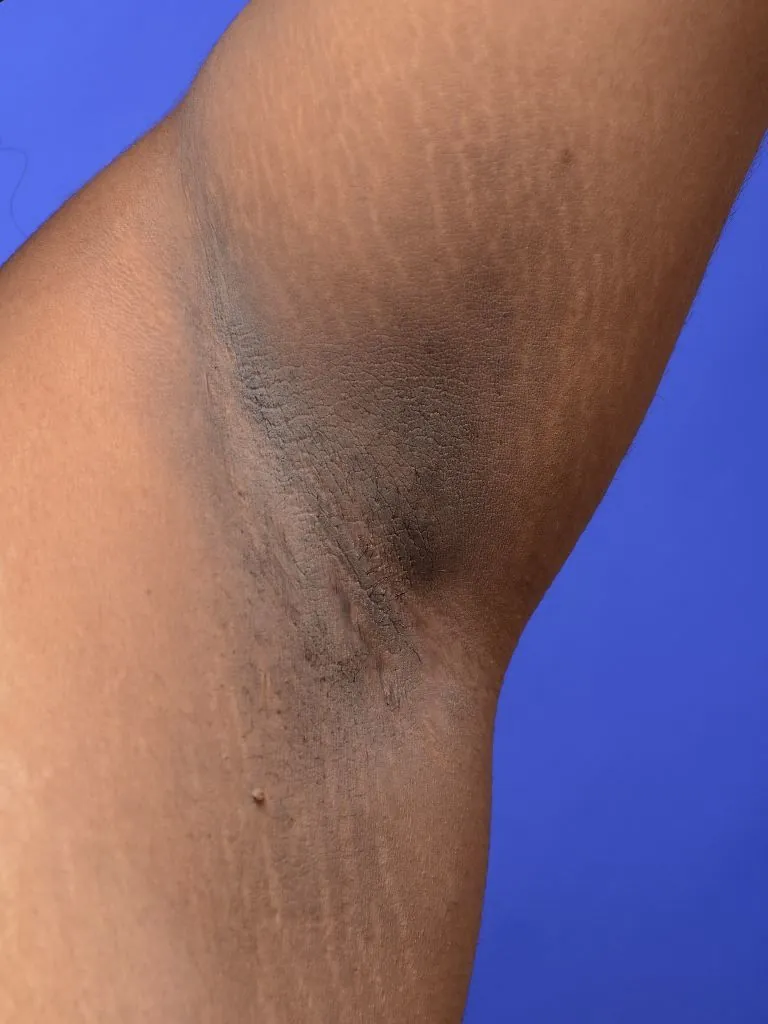
What does it look like on brown and black skin?
Acanthosis nigricans is more common in people with darker skin. DermNet cites US estimates of 13.3% in African Americans, 5.5% in Latinos and 34.2% in Native Americans, compared with under 1% in white people. On darker skin it more often involves the neck, can appear on the face, and can show up as dark, thick skin over the elbows, knees and knuckles, a variant DermNet calls acral acanthotic anomaly. On lighter skin it tends to look grey or light brown, so it is easy to miss.
Why is acanthosis nigricans linked to insulin resistance?
In insulin resistance, the body's cells respond poorly to insulin, so the pancreas makes more of it. DermNet explains that high insulin levels are thought to stimulate the growth of skin cells through the IGF-1 receptor, which thickens the skin in folds. That is why acanthosis nigricans often appears alongside obesity, type 2 diabetes, metabolic syndrome and polycystic ovary syndrome (PCOS).
The AAD says a dark, velvety patch may be the first sign that someone has diabetes or prediabetes, and its advice is direct: get tested for diabetes. That matters because the National Institute of Diabetes and Digestive and Kidney Diseases (NIDDK) says people with insulin resistance and prediabetes usually have no symptoms, and the CDC notes that you can't tell if someone has insulin resistance by looking at them. A skin sign is one of the few early clues you can see, and Cleveland Clinic lists darkened skin in your armpit or back and sides of your neck among the symptoms of prediabetes.
The link is strong. In a US study cited by DermNet, people with acanthosis nigricans were about twice as likely to have type 2 diabetes as people without it (35.4% compared with 17.6%). DermNet also notes that in people with darker skin, acanthosis nigricans can appear without insulin resistance, so it is a less reliable marker there. That is one more reason to rely on a blood test, not the skin, for the answer.
Which blood tests check for prediabetes?
Your doctor chooses the test. NIDDK lists three, with the ranges that mean prediabetes:
- A1C: 5.7% to 6.4%, an average of blood sugar over the past few months.
- Fasting plasma glucose: 100 to 125 mg/dL after not eating overnight.
- Oral glucose tolerance test: 140 to 199 mg/dL two hours after a sugary drink.
Who is most likely to get it?
DermNet says it affects males and females of all ages, most often people under 40. In the US study it cites, about 18% of children and 19% of adults had acanthosis nigricans. Children and teens with it deserve the same blood sugar check, through their pediatrician. It is also more likely if you have a family history of type 2 diabetes, carry extra weight around the waist, or have PCOS, irregular periods or other signs of high androgen levels such as acne and excess hair growth. Any of these together with a dark, velvety neck is a good reason to book the test soon. Our guide to hormonal acne covers the skin signs of PCOS in more detail.
What else causes acanthosis nigricans?
Insulin resistance is the most common cause, but there are others. MedlinePlus and DermNet list:
- Medicines: DermNet names nicotinic acid, oral contraceptives, oral corticosteroids, injected insulin and some hormones such as testosterone. Patches usually fade after the drug is stopped, but never stop a prescription without your doctor.
- Hormone and autoimmune conditions: PCOS, and less often conditions such as Hashimoto thyroiditis or lupus.
- Genetics: a rare inherited form starts in childhood, and MedlinePlus mentions genetic disorders such as Down syndrome.
- Cancer, rarely: a rare form appears suddenly and spreads quickly, often in people who are not overweight, and may involve the mouth, lips or palms and cause itching. DermNet says it is most often linked to stomach cancer. This form is uncommon, but its pattern is a reason to see a doctor promptly.
Acanthosis nigricans is not an infection and does not spread from person to person.
What can be mistaken for acanthosis nigricans?
Several conditions darken skin in folds. A doctor can usually tell them apart by looking, and sometimes with a Wood's lamp or skin scraping.
| Condition | Where it shows up | How it differs |
|---|---|---|
| Post-inflammatory hyperpigmentation | Anywhere skin was irritated or injured | Flat, with no velvety texture; follows a rash, shaving or friction |
| Tinea versicolor | Chest, back, neck | Fine scale; a skin scraping shows yeast |
| Erythrasma | Armpits, groin, between toes | A bacterial infection that glows coral-red under a Wood's lamp |
| Confluent and reticulated papillomatosis | Chest, back, neck | A net-like pattern of brown bumps, mainly in young adults |
| Melasma | Cheeks, forehead, upper lip | Flat brown patches on the face that worsen with sun |
The first four are on DermNet's list of look-alikes; see our guide to tinea versicolor for that one. For flat dark marks, see our guides to fading dark spots and melasma causes and triggers.
How is acanthosis nigricans treated?
Treat the cause first. DermNet calls treating the underlying condition the main approach, and MedlinePlus says acanthosis nigricans often clears up once the cause is found and treated. Fading is slow, often over months.
Treating insulin resistance
Healthier eating, more movement and weight loss improve insulin resistance, and DermNet notes that acanthosis nigricans often improves or resolves with weight loss. For prediabetes, NIDDK cites the Diabetes Prevention Program, where losing 5% to 7% of their starting weight helped people lower their chance of developing type 2 diabetes. Your doctor may also prescribe a medicine such as metformin, which DermNet says can moderately improve the skin.
Treatments for the skin itself
MedlinePlus notes that the patches themselves need no treatment, but moisturizers, topical medicines or laser can help if their appearance bothers you. DermNet lists exfoliating acids such as salicylic acid and glycolic acid, retinoids such as adapalene and tretinoin, and prescription calcipotriol cream. These soften and lighten the patches but do not fix the cause, and the patches tend to return if insulin resistance does. Skin folds are sensitive, so start slowly and stop if the skin stings or peels. A dermatologist can advise on laser for stubborn patches.
When should you see a doctor about dark skin on your neck?
MedlinePlus advises seeing a provider if you notice new areas of thick, dark, velvety skin. Start with your primary care doctor, who can order blood sugar tests. Go promptly if:
- the patches appeared suddenly or are spreading fast;
- they involve your mouth, lips, palms or soles, or they itch a lot;
- you have lost weight without trying or feel unwell;
- you already have diabetes and the patches are new or growing, which can be a sign to review your blood sugar control;
- a child or teen has them.
For the skin itself, find a dermatologist near you. Bring a list of your medicines, including supplements and birth control.
Frequently asked questions
Is acanthosis nigricans a sign of diabetes?
It can be. It is most often linked to insulin resistance, and the American Academy of Dermatology says it may be the first sign of diabetes or prediabetes. Only a blood test can tell, so ask your doctor for one.
Can you scrub off acanthosis nigricans?
No. It is a thickening of the skin itself, so scrubbing does not remove it and can irritate the skin. It usually fades only when the cause, often insulin resistance, is treated.
Does acanthosis nigricans go away?
Often, yes, once the cause is treated. It improves slowly, over months, with weight loss, treatment of insulin resistance or stopping a medicine that caused it. Creams can soften and lighten patches in the meantime.
Why is the back of my neck dark and velvety?
A dark, velvety band on the back or sides of the neck is the classic look of acanthosis nigricans. It is common, especially on darker skin, and worth a doctor visit to check your blood sugar.
Is acanthosis nigricans contagious?
No. It is a skin change linked to insulin, hormones, medicines or genetics. It is not an infection and does not spread from person to person.
Can acanthosis nigricans be a sign of cancer?
Rarely. A rare form appears suddenly, spreads quickly and can involve the mouth or palms, often in people who are not overweight. Most cases are linked to insulin resistance, but sudden or widespread patches need prompt medical review.
Sources
Pori is a wellness and skincare education app, not a medical device. This article is for general information and isn't medical advice. For anything that worries you, see a dermatologist.