Pori

- Caffeine eye creams can reduce puffiness a little, for a few hours.
- Retinoids have the best evidence for fine lines, but mostly from facial studies; start two or three nights a week.
- Peptides and niacinamide showed modest wrinkle improvements in small, mostly industry-run trials.
- A fragrance-free face moisturizer can work around the eyes; no cream fixes hollows or fat-related bags.
The main types of eye cream are built around caffeine for puffiness, retinoids for fine lines and thin skin, peptides for wrinkles, brightening ingredients such as vitamin C and niacinamide, and plain rich moisturizers for dryness. The evidence is modest for all of them, and most studies were done on the whole face, with few on the eye area itself. Pick by your main concern, and expect gradual, partial changes.
Before you buy, you can scan an eye cream's barcode or label with the ingredient scanner in Pori to check it against your skin type. It reads the ingredients; it doesn't diagnose skin conditions.
Below we explain how eye creams differ from face moisturizer, what each type of active can and can't do, the studies behind them, and which products in our catalogue fit each type. This guide is based on published research and each brand's ingredient list; we did not test these products on skin.
Is eye cream different from face moisturizer?
Somewhat. A 2024 review of popular eye cream ingredients in the International Journal of Women's Dermatology says eye creams tend to be thicker and contain more oil than regular facial creams, and often carry more active ingredients. They are also usually made and tested to be gentle on the thin skin around the eyes, which the review describes as the thinnest on the body, as little as 0.2 mm in some people.
That doesn't mean you must buy one. A fragrance-free face moisturizer that doesn't sting can go around the eyes too. A separate eye product makes sense when you want a specific active, such as caffeine or a gentle retinoid, at a strength meant for that area, or when your usual face products irritate your eyes. The same review is frank that the degree to which these ingredients visibly improve skin "is not universally proven," and that large trials of eye creams themselves are rare because they're sold as cosmetics.
Types of eye creams at a glance
| Type | Key ingredients | Best for | Evidence | Watch out for |
|---|---|---|---|---|
| Caffeine | Caffeine, often with green tea (EGCG) | Morning puffiness, bluish circles | Small studies, temporary effect | Won't move fat-related bags |
| Retinoid | Retinol, retinal | Crow's feet, crepey or thin skin | Good on the face; few eye-area trials | Stinging, peeling, pregnancy |
| Peptide | Palmitoyl pentapeptide-4 and others | Fine lines, people who can't use retinoids | A few industry-run controlled trials | Results are modest |
| Brightening | Vitamin C, niacinamide | Dullness, some pigment | Face studies; slow | Pure vitamin C can sting |
| Hydrating or rich | Hyaluronic acid, ceramides, oils, butters | Dry, crinkly under-eyes | Hydration improves texture quickly | Possible milia with very heavy creams |
Does caffeine eye cream work?
For puffiness, a little, and for a few hours. Caffeine is thought to work by narrowing small blood vessels. The 2024 review says caffeine at concentrations up to 3% is considered safe and easily absorbed into skin. Its best-known trial is small: in 11 women, an eye pad with 3% caffeine and vitamin K used for a month significantly reduced under-eye pigmentation, but the study was small and single-blind.
The Ordinary Caffeine Solution 5% + EGCG is the simplest example: a water-based serum with caffeine and a green tea derivative, made for puffiness and dark circles. Kiehl's Avocado Eye Treatment also contains caffeine, inside a rich, unscented cream with avocado oil, which suits dry under-eyes. Neither will change brown pigment or hollows. Our Caffeine Solution review and puffy eyes in the morning cover what else helps, such as cold compresses and a raised pillow.
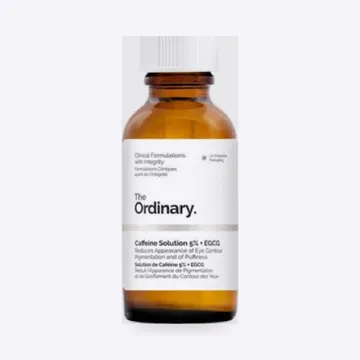
Caffeine Solution 5% + EGCG
Caffeine for morning puffiness, at the price of a coffee.
Suits: Normal, Dry, Combination, Oily, Sensitive skin
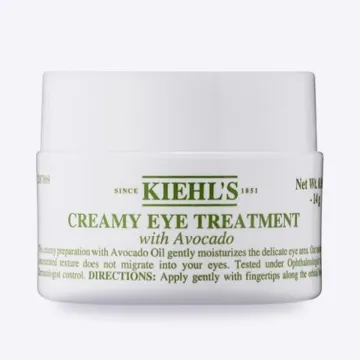
Creamy Eye Treatment with Avocado
Rich, bland comfort cream for dry, papery under-eye skin.
Suits: Dry, Normal, Sensitive skin
From Pori's catalogue. Amazon links carry our Associates tag: Pori earns from qualifying purchases, at no cost to you. No brand pays to be listed. Photos: Open Beauty Facts contributors, CC BY-SA 3.0.
Is retinol safe to use around the eyes?
Yes, if it's a formula made for the eye area and you start slowly. Retinol and retinal are the eye cream actives with the strongest biology behind them, because retinoids increase collagen and thicken the outer skin over months. The evidence is mostly borrowed from the face. The 2024 review cites a study in which 0.05% tretinoin, a prescription retinoid, improved fine wrinkles in three months, and notes the lack of clinical trials of retinoids in eye creams on the eye area itself. It also notes mild redness, peeling and dryness as common complaints.
RoC Retinol Correxion Eye Cream is a long-running drugstore retinol eye cream; RoC doesn't publish the percentage. Beauty of Joseon Revive Eye Serum uses retinal, a step closer to the active form, with ginseng extract, niacinamide, adenosine and ceramide NP. Use either two or three nights a week at first, keep it on the orbital bone and off the lash line, and wear sunscreen in the day. Skip retinoids if you're pregnant or trying to conceive. Our guides to retinal vs. retinol, the RoC Retinol Correxion review and crepey skin under the eyes go further.
Retinol Correxion Line Smoothing Eye Cream
Drugstore retinol for crow's feet — start twice a week.
Suits: Normal, Dry, Combination skin

Eye Serum
Evening eye cream with niacinamide, retinal and glycerin. Fragrance-free.
Suits: Normal, Dry, Oily, Combination skin
From Pori's catalogue. Amazon links carry our Associates tag: Pori earns from qualifying purchases, at no cost to you. No brand pays to be listed. Photos: Open Beauty Facts contributors, CC BY-SA 3.0.
Do peptide eye creams work?
Modestly, according to a handful of controlled studies, most of them run by manufacturers. The best known involves palmitoyl pentapeptide-4 (pal-KTTKS, sold as Matrixyl). In a 12-week, double-blind, split-face study of 93 women aged 35 to 55, a moisturizer with 3 ppm of the peptide reduced wrinkles and fine lines significantly more than the same moisturizer without it. The study was run by Procter & Gamble researchers.
The same company tested an eye cream containing niacinamide, two peptides, carnosine and caffeine in two split-face studies of 42 and 35 women. After four weeks the eye cream improved the smoothness of crow's feet compared with no treatment, and pooled data showed less apparent wrinkle depth. That's encouraging but short, and it can't say which ingredient did the work. Peptides are a reasonable choice if retinoids irritate you; our guides to peptides in skincare and copper peptides compare the main types.
What about vitamin C, niacinamide and hyaluronic acid?
- Niacinamide: in a split-face study of 50 women, 5% niacinamide applied twice daily for 12 weeks reduced fine lines and wrinkles and improved elasticity. It's usually well tolerated near the eyes.
- Vitamin C: the 2024 review describes a six-month double-blind trial of 5% vitamin C on sun-damaged skin that improved overall appearance compared with placebo. Pure ascorbic acid can sting thin skin, so eye products often use gentler derivatives. See the vitamin C serum guide.
- Hyaluronic acid: in 76 women aged 30 to 60, a low-molecular-weight hyaluronic acid cream used twice daily for 60 days improved hydration and elasticity compared with placebo. Hydration also makes fine dehydration lines look softer within hours.
- Ceramides: the review notes a ceramide cream significantly increased the water content of eyelid skin, with no adverse reactions on eye testing.
Eye cream, eye gel or eye serum: which texture should you choose?
Texture is a separate choice from the active ingredient, and it matters most for comfort and makeup:
- Eye serums are thin, water-based liquids, often with a dropper or roller. They suit caffeine and other actives and layer easily under a cream or concealer. The Ordinary's caffeine product is one.
- Eye gels are light and cooling and absorb fast. They suit puffiness, oily skin and mornings, and rarely leave a film under makeup.
- Eye creams are richer. As the 2024 review notes, they tend to be thicker and contain more oil than regular facial creams, which helps dry, crinkly under-eyes and buffers retinoids.
- Balms and sticks are the heaviest. They suit very dry skin or overnight use, and they're the most likely to feel greasy or migrate into the eyes.
If your under-eyes are oily or you get milia easily, start with a serum or gel. If they're dry or you're using a retinoid, a cream is more comfortable.
Which eye cream type helps dark circles?
It depends on the cause. Brown, pigment-type circles respond poorly to creams and need sunscreen and often a dermatologist. Bluish circles and puffiness may look a little better with caffeine. Circles from thin skin may improve slowly with a retinoid. Shadows from hollows or bags don't respond to any cream. Our guides to the types of dark circles and the best eye cream for dark circles match products to each cause, and how apps score dark circles explains what photos can and can't show.
How do you use an eye cream?
- Amount: a rice-grain amount for both eyes is enough.
- Where: tap it along the orbital bone with your ring finger. It spreads toward the lid on its own.
- When: caffeine in the morning; retinoids at night; hydrating creams morning or night.
- Order: after serums and before or with moisturizer, then sunscreen in the morning. See skincare routine order.
- Sun: Cleveland Clinic lists sunscreen and sunglasses among the basics for under-eye skin, because sun exposure makes the body produce more melanin there.
If small white bumps appear after switching to a very rich eye cream, they may be milia; a lighter formula for a couple of months is a low-risk experiment, as our guide to milia under the eyes explains. Stop any eye product that makes your eyes water, burn or swell, and see a doctor if swelling or darkness affects one eye only. Browse all options in the eye cream catalogue.
Frequently asked questions
Do eye creams actually work?
Some help modestly. Caffeine can reduce puffiness for a few hours, and retinoids, peptides and niacinamide can soften fine lines over months. A 2024 review notes that the visible benefit of eye cream ingredients is not universally proven and that most studies were on facial skin.
Can I use my face moisturizer as eye cream?
Often yes, if it's fragrance-free and doesn't sting your eyes. An eye cream is worth buying when you want a specific active, such as caffeine or a gentle retinoid, made for the thinner skin around the eyes.
What is the best ingredient for under-eye wrinkles?
Retinoids have the strongest evidence for fine lines, mostly from facial studies. Peptides such as palmitoyl pentapeptide-4 and 5% niacinamide also showed modest improvements in controlled trials.
Does caffeine eye cream help dark circles?
It may help bluish circles and puffiness a little, for a short time. It won't fade brown pigment or fill hollows. Concentrations up to 3% are considered safe and well absorbed.
Is retinol eye cream safe?
Usually, when it's made for the eye area and introduced slowly, two or three nights a week. Expect some dryness or peeling at first, keep it off the lash line, use sunscreen in the day and avoid retinoids during pregnancy.
At what age should you start using eye cream?
There's no set age. Start when you have a specific concern, such as dryness, puffiness or fine lines. Daily sunscreen and sunglasses do more to protect the eye area at any age.
Sources
- Hamie H et al. A review of the efficacy of popular eye cream ingredients. Int J Womens Dermatol, 2024 (PMC)
- Robinson LR et al. Topical palmitoyl pentapeptide provides improvement in photoaged human facial skin. Int J Cosmet Sci, 2005 (PubMed)
- Kaczvinsky JR et al. Efficacy of anti-aging products for periorbital wrinkles as measured by 3-D imaging. J Cosmet Dermatol, 2009 (PubMed)
- Bissett DL, Oblong JE, Berge CA. Niacinamide: A B vitamin that improves aging facial skin appearance. Dermatol Surg, 2005 (PubMed)
- Cleveland Clinic: Dark Circles Under Eyes
- The Ordinary: Caffeine Solution 5% + EGCG Eye Serum (product page)
- Target: RoC Retinol Correxion Line Smoothing Eye Cream (listing)
- YesStyle: Beauty of Joseon Revive Eye Serum (listing and ingredients)
- Target: Kiehl's Avocado Eye Treatment (listing)
Pori is a wellness and skincare education app, not a medical device. This article is for general information and isn't medical advice. For anything that worries you, see a dermatologist.