Pori
- A water-light toner with niacinamide, tea tree leaf water, small amounts of salicylic, lactobionic and citric acid, and peppermint oil at the end.
- At a brand-stated pH of 5.5, the acids are mild: expect light smoothing over weeks; the "30 days" name oversells it.
- Good for oily and acne-prone skin that wants a gentle daily acid; skip it if peppermint, tea tree or fragrance bothers your skin, or if it's very dry.
- $22.44 for 150 ml (about $4.43 per oz) at Soko Glam as of November 2026; Paula's Choice 2% BHA Liquid Exfoliant is the stronger, fragrance-free pick for clogged pores.
Some By Mi AHA BHA PHA 30 Days Miracle Toner is a mild acid toner that suits oily and acne-prone skin looking for a light daily exfoliant. Its acids are low on the list and the brand gives a pH of 5.5, so expect gentle smoothing over time. It also contains peppermint oil and tea tree, so sensitive and very dry skin types have better options.
If you want to check how its ingredient list fits your own skin type, you can scan the bottle's barcode or label with the ingredient scanner in Pori.
Below we go through the full ingredient list, how strong the acids really are, who should buy it and who should skip it, the price per ounce, how to use it and what to buy instead. We compared published ingredient lists, brand claims and listed prices; we did not test these products on skin.
What is the Some By Mi Miracle Toner?
It's the best-known product from Some By Mi, a Korean brand whose "30 Days Miracle" line promises visible change in a month. Soko Glam, a US K-beauty retailer, describes it as a toner with three types of chemical exfoliants (AHAs, BHAs and PHAs) plus papaya and witch hazel extracts, a high concentration of tea tree water, and adenosine and niacinamide, and says it's dermatologically tested for sensitive skin with a pH of 5.5. The brand still sells it on its Korean store.
| Detail | What the listing states |
|---|---|
| Exfoliants | Salicylic acid (BHA), lactobionic acid (PHA), citric acid (AHA) |
| Other key ingredients | Niacinamide, tea tree leaf water, adenosine |
| pH | 5.5 |
| Fragrance | No "fragrance" listed, but contains peppermint oil and raspberry ketone |
| Size | 150 ml (5.07 fl oz) |
What's in it? The full ingredient list explained
Soko Glam lists: water, butylene glycol, dipropylene glycol, glycerin, niacinamide, Melaleuca alternifolia (tea tree) leaf water, polyglyceryl-4 caprate, Carica papaya (papaya) fruit extract, Lens esculenta (lentil) seed extract, Hamamelis virginiana (witch hazel) extract, Nelumbo nucifera (lotus) flower extract, swiftlet nest extract, sodium hyaluronate, fructan, allantoin, adenosine, hydroxyethyl urea, xylitol, salicylic acid, lactobionic acid, citric acid, sodium citrate, 1,2-hexanediol, benzyl glycol, ethylhexylglycerin, raspberry ketone, Mentha piperita (peppermint) oil. The same list appears on INKEEDecoder.
- Water, butylene glycol, dipropylene glycol and glycerin: a hydrating base.
- Niacinamide: fifth on the list, the most prominent active. Studies link it to lower sebum at 2% and fewer spots and less blotchiness at 5%, though this toner doesn't state its level.
- Tea tree leaf water: the water left after distilling tea tree leaves, milder than tea tree oil. A systematic review found the evidence for tea tree oil in acne still needs more and better trials.
- Polyglyceryl-4 caprate: a solubilizer that keeps the small amount of oil dispersed.
- Papaya, lentil, witch hazel and lotus extracts: plant extracts. Papaya carries the enzyme papain, but how much survives in a toner isn't stated.
- Swiftlet nest extract: an edible bird's nest extract popular in Asian skin care. It makes the toner not vegan.
- Sodium hyaluronate, fructan, hydroxyethyl urea and xylitol: humectants. Sodium hyaluronate is a form of hyaluronic acid.
- Allantoin and adenosine: a soother and a skin-conditioning ingredient used in anti-wrinkle products.
- Salicylic acid, lactobionic acid and citric acid: the BHA, PHA and AHA of the name, all in the bottom third of the list. Sodium citrate pairs with citric acid to buffer the pH.
- 1,2-hexanediol, benzyl glycol and ethylhexylglycerin: preservative-boosting solvents.
- Raspberry ketone and peppermint oil: the last two ingredients. INKEEDecoder classes both as perfuming. Peppermint oil gives a cooling tingle and can irritate sensitive skin.
A second version of the list on INKEEDecoder has tea tree leaf extract in place of leaf water and adds pentylene glycol, caprylyl glycol, ethyl hexanediol and phenoxyethanol. Both versions have been sold, so check the box you receive. There is no glycolic or lactic acid in either list; the AHA is citric acid.
How strong are the acids?
Mild. Three things point that way. The acids sit below the plant extracts and humectants, so they are present in small amounts. The pH is 5.5, close to skin's own; acids exfoliate more at a lower pH. For comparison, the FDA's guidance for AHA cosmetics accepts a concentration of 10% or less and a pH of 3.5 or greater as safe for consumers, so this toner is far gentler than that ceiling. And citric acid often works as a pH adjuster here, with sodium citrate as its buffer.
The PHA has a friendly track record. Polyhydroxy acids such as lactobionic acid give effects similar to AHAs without the sensory irritation and add humectant benefits, according to a 2004 review written by researchers working on PHAs. Our guide to PHA for sensitive skin explains more.
Salicylic acid is the ingredient with the most relevance for clogged pores, because it's oil-soluble. A Cochrane review of salicylic acid, niacinamide and fruit acids for acne found that the quality of evidence was low or very low for most comparisons, so these ingredients are reasonable helpers; none is a proven acne treatment on its own. See AHA vs BHA and salicylic acid for blackheads for the basics.
Who is it for, and who should skip it?
It's a good fit if you:
- Have oily or combination skin with occasional clogged pores and want a gentle daily acid.
- Are new to exfoliating acids and want a mild start. Our exfoliating acids for beginners guide covers the options.
- Like a cooling, refreshing toner step.
Think twice if you:
- Have sensitive or rosacea-prone skin: peppermint oil and raspberry ketone are fragrance ingredients, and tea tree can irritate. Our guide to fragrance and essential oils explains why that matters.
- Have very dry or damaged skin: even mild acids can sting a damaged barrier. Repair first.
- Have moderate or severe acne: a toner won't control it. Adapalene, benzoyl peroxide or a dermatologist's plan will do more.
- Avoid animal-derived ingredients: the bird's nest extract rules it out.
The AAD advises that sensitive skin may sting or burn after exfoliating and to choose your method by skin type. It also suggests testing a new product on a quarter-sized area twice a day for 7 to 10 days first; our patch test guide shows how.
How much does it cost per ounce?
As of November 2026, Soko Glam lists the 150 ml (5.07 fl oz) bottle at $22.44, about $4.43 an ounce. Other K-beauty retailers and Amazon sellers stock it too, often at different prices; buy from an established retailer to lower the risk of counterfeits. That's mid-range for a Korean toner and cheaper per ounce than most serum-strength exfoliants, though you'll use more of a toner.
How do you use it?
Soko Glam's directions are to soak a cotton pad after cleansing, wipe it over the skin and tap to help absorption.
- Start every other evening after cleansing. Increase to daily only if your skin stays calm.
- Wipe it on with a cotton pad, avoiding the eye area and any broken skin.
- Follow with a hydrating serum and moisturizer.
- Use sunscreen every morning. The FDA recommends a sunburn alert on AHA products, advising sunscreen, protective clothing and limited sun while using them and for a week afterwards. Many Korean sunscreens use UV filters not approved by the FDA and are sold in the US as imports; our Korean sunscreen guide explains.
Don't stack it with a retinoid or a strong peel on the same night. Our guides to how often to exfoliate and ingredients not to mix help you plan.
What are the best alternatives?
- Paula's Choice 2% BHA Liquid Exfoliant: a stronger, fragrance-free salicylic acid leave-on for blackheads and clogged pores. See our 2% BHA review.
- Paula's Choice Skin Perfecting 6% Mandelic Acid + 2% Lactic Acid Liquid Exfoliant: a fragrance-free AHA option with gentler, larger-molecule mandelic acid. Our guide to mandelic acid explains who it suits.
- The Ordinary Glycolic Acid 7% Exfoliating Toner: a stronger AHA toner for texture and dullness; sensitive skin should skip it. Read our Glycolic Acid review.
- The Ordinary Lactic Acid 10% + HA: a stronger, fragrance-free AHA serum for rough texture on normal or dry skin, used a few evenings a week. See our Lactic Acid 10% + HA review.
- Anua Heartleaf 77% Soothing Toner: if you mostly want a calming, hydrating toner with no acid at all, see our Anua review.
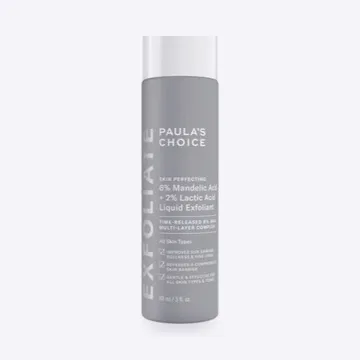
Skin Perfecting 6% Mandelic Acid + 2% Lactic Acid Liquid Exfoliant
Exfoliant with mandelic acid and lactic acid. Fragrance-free.
Suits: Normal, Dry, Oily, Combination, Sensitive skin
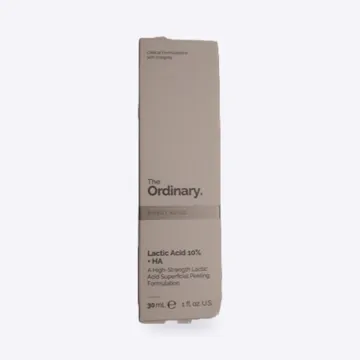
Lactic Acid 10% + HA
Leave-on exfoliant with lactic acid, hyaluronic acid and glycerin. Fragrance-free.
Suits: Normal, Dry, Oily, Combination skin
From Pori's catalogue. Amazon links carry our Associates tag: Pori earns from qualifying purchases, at no cost to you. No brand pays to be listed. Photos: Open Beauty Facts contributors, CC BY-SA 3.0.
For more, see our best toners and best BHA exfoliants, or browse toners.
Is it worth buying?
It's a reasonable buy for oily skin that wants a gentle, refreshing acid step and doesn't mind a minty tingle. It is not a miracle, and the "30 days" name oversells a formula with low-placed acids at pH 5.5. If clogged pores are your main concern, a fragrance-free 2% BHA will do more; if your skin is sensitive, a PHA or hydrating toner without peppermint is the safer choice. For more Korean skincare, visit our K-beauty hub or our guide to Korean skincare brands.
Frequently asked questions
Does the Some By Mi Miracle Toner really work in 30 days?
The name is marketing. Its salicylic acid, niacinamide and gentle acids may help oily skin look smoother over a few weeks, but the acids are mild and it is not an acne treatment. For moderate or persistent acne, see a dermatologist.
Can I use Some By Mi Miracle Toner every day?
Many oily-skinned people can, because it is mild. Start every other evening for two weeks, then increase if your skin stays comfortable. Stop if you see stinging, peeling or redness.
Is Some By Mi Miracle Toner good for sensitive skin?
It is gentler than most acid toners, but it contains peppermint oil and tea tree leaf water, which can bother reactive skin. Patch test first, or choose a fragrance-free PHA or hydrating toner.
Can I use it with retinol or vitamin C?
Use it at a different time from a retinoid, for example the toner in the morning and the retinoid at night, or on alternate nights. Layering acids and retinoids together raises the chance of irritation.
Do I need sunscreen with an AHA toner?
Yes. The FDA recommends that products with alpha hydroxy acids carry a sunburn alert and that you use sunscreen while using them and for a week afterwards.
Is Some By Mi Miracle Toner vegan?
No. The ingredient list includes swiftlet nest extract, which comes from birds' nests.
Sources
- Soko Glam: Some By Mi AHA-BHA-PHA 30Days Miracle Toner (ingredients, pH, price, directions)
- INKEEDecoder: Some By Mi AHA-BHA-PHA 30 Days Miracle Toner
- INKEEDecoder: Some By Mi Aha Bha Pha 30 Days Miracle Toner (alternate ingredient list)
- Some By Mi official Korean store
- Draelos ZD et al. The effect of 2% niacinamide on facial sebum production. J Cosmet Laser Ther, 2006 (PubMed)
- US Food and Drug Administration: Alpha hydroxy acids
- Grimes PE et al. The use of polyhydroxy acids (PHAs) in photoaged skin. Cutis, 2004 (PubMed)
- Liu H et al. Topical azelaic acid, salicylic acid, nicotinamide, sulphur, zinc and fruit acid for acne. Cochrane, 2020 (PubMed)
- Kairey L et al. Tea tree oil: systematic review of randomized controlled trials. Front Pharmacol, 2023 (PubMed)
- American Academy of Dermatology: How to safely exfoliate at home
Pori is a wellness and skincare education app, not a medical device. This article is for general information and isn't medical advice. For anything that worries you, see a dermatologist.