Pori

- The AAD says skincare does not need to be expensive to work, and a 2017 study found 'dermatologist recommended' moisturizers cost more per ounce.
- L'Oréal owns CeraVe and Kiehl's; Estée Lauder owns The Ordinary and La Mer; Unilever owns Paula's Choice.
- Hyaluronic acid serums from L'Oréal brands run from $27.99 to $95 for about 1 oz; The Ordinary's costs $9.90.
- Save on cleansers, moisturizers, hydrating serums, niacinamide and retinol; spend on a sunscreen you will wear daily or a well-formulated vitamin C.
Expensive skincare does not reliably work better than drugstore skincare. The American Academy of Dermatology says products do not need to be expensive to be effective, and the same parent companies often sell near-identical key ingredients at both prices: L'Oréal owns CeraVe and Kiehl's, and Estée Lauder owns The Ordinary and La Mer. Save on cleansers, basic moisturizers and hydrating serums, and spend where texture or formulation makes you use a product every day, such as sunscreen.
To compare a cheap bottle with an expensive one yourself, scan each barcode or label with the ingredient scanner in Pori and check both formulas against your skin type. Pori reads the ingredient list for you; it does not diagnose skin conditions.
This comparison covers what the evidence says about price, what you actually pay for at the luxury counter, which companies own both tiers, and where splurging can make sense. We compared published ingredient lists, brand claims and listed prices; we did not test these products on skin. Prices are US retailer list prices as of November 2026, with the retailer named, and they change often.
Do expensive skincare products work better?
Not as a rule. The AAD's advice on skin care on a budget is that a routine of cleansing, moisturizing and sun protection covers the basics, and that a product does not need to be expensive to be effective. What makes a product work is the active ingredient, its strength, the formula around it and whether you use it consistently. None of those track price closely.
Research on what people actually buy points the same way. A 2017 study in JAMA Dermatology looked at 174 best-selling moisturizers from Amazon, Target and Walmart. The median price was $0.59 per ounce. Products marketed as "dermatologist recommended" cost more, a median of $0.79 per ounce against $0.59 for products without the claim. That phrase raised the price, yet it tells you nothing measurable about how well a product works. Only 12% of the products were free of every common allergen the researchers checked.
Price can still buy real things. It just tends to buy feel, packaging and brand experience more than better results on skin.
Which companies own both drugstore and luxury brands?
The same few groups sit on both sides of the aisle, so a luxury jar and a drugstore tube can come out of the same research organization.
| Parent company | Drugstore or budget brands | Prestige or luxury brands |
|---|---|---|
| L'Oréal | L'Oréal Paris, Garnier, Thayers, CeraVe, La Roche-Posay, Vichy | Lancôme, Kiehl's, Helena Rubinstein, IT Cosmetics, Youth To The People, Medik8, SkinCeuticals |
| The Estée Lauder Companies | The Ordinary | Estée Lauder, Clinique, La Mer, Origins, Dr.Jart+, NIOD |
| Unilever | Dove, Pond's | Paula's Choice (bought in 2021) |
| Beiersdorf | Nivea, Eucerin, Aquaphor | La Prairie |
L'Oréal splits these into divisions. Its Consumer Products division holds L'Oréal Paris and Garnier, its luxury division holds Lancôme and Kiehl's, and its Dermatological Beauty division holds CeraVe, La Roche-Posay, Vichy and SkinCeuticals. Estée Lauder has owned DECIEM, the company behind The Ordinary, outright since 2024. So when you choose between The Ordinary and Clinique, the money goes to the same company either way. Our guides to Kiehl's, Clinique and The Ordinary cover each brand in detail.
What does the same ingredient cost at each price tier?
Hyaluronic acid shows the gap clearly, because L'Oréal sells it at three price points and Estée Lauder adds a fourth:
| Product | Owner | Price (as of November 2026) |
|---|---|---|
| The Ordinary Hyaluronic Acid 2% + B5 | Estée Lauder | $9.90 for 30 ml (theordinary.com) |
| L'Oréal Paris Revitalift Derm Intensives Hyaluronic Acid Serum | L'Oréal | $27.99 for 1 fl oz (Target) |
| La Roche-Posay Hyalu B5 Serum | L'Oréal | $42.99 for 1 oz (Ulta) |
| SkinCeuticals Hydrating B5 Gel | L'Oréal | $95 for 1 fl oz (Dermstore) |
All four rely on hyaluronic acid, a humectant that draws water into the top layer of skin, and the three with B5 in their names add panthenol (vitamin B5). The pricier ones differ in texture, extra ingredients and packaging. Hyalu B5 also lists fragrance and denatured alcohol, which matters more for sensitive skin than any price difference. Our Hyaluronic Acid 2% + B5 review covers the budget option.
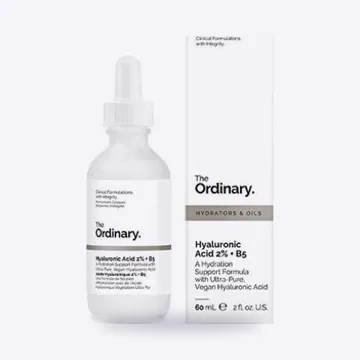
Hyaluronic Acid 2% + B5
Water-binding layer under moisturiser for tight, thirsty skin.
Suits: Dry, Normal, Combination, Oily, Sensitive skin
From Pori's catalogue. Amazon links carry our Associates tag: Pori earns from qualifying purchases, at no cost to you. No brand pays to be listed. Photos: Open Beauty Facts contributors, CC BY-SA 3.0.
Moisturizers follow the same pattern. CeraVe Moisturizing Cream starts at $14.99 on cerave.com and combines three ceramides with petrolatum, dimethicone and hyaluronic acid. Kiehl's Ultra Facial Cream costs $39 for 1.7 oz at Ulta, about $23 per ounce, and does most of its work with glycerin, dimethicone and squalane. Clinique Moisture Surge 100H costs $31 for 1 oz. The Ordinary's Natural Moisturizing Factors + HA costs $6.70. All four are sensible moisturizers. The expensive ones feel lighter and more polished on the skin, and that is a fair reason to buy them if you can afford it. Our types of moisturizers guide explains the textures.
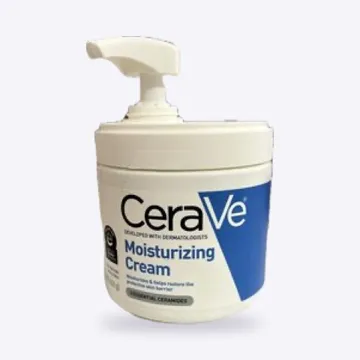
Moisturizing Cream
Thick ceramide cream for skin that dries out by midday.
Suits: Dry, Normal, Sensitive skin
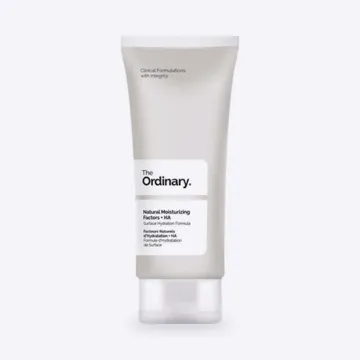
Natural Moisturizing Factors + HA
The cheapest moisturiser worth owning, if money is the constraint.
Suits: Normal, Dry, Combination, Sensitive skin
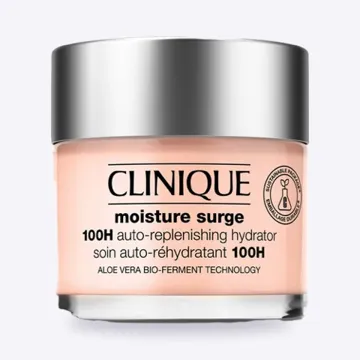
Moisture Surge 100 Hour Auto-Replenishing Hydrator
Moisturizer with magnesium ascorbyl phosphate, aloe vera and green tea extract. Fragrance-free.
Suits: Normal, Dry, Oily, Combination, Sensitive skin
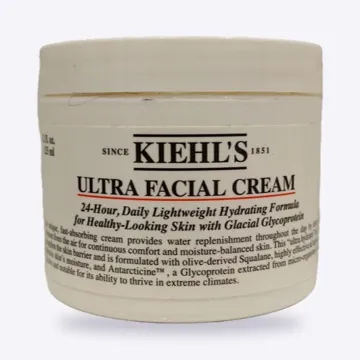
Ultra Facial Cream
Classic 24-hour cream when the drugstore texture is the dealbreaker.
Suits: Dry, Normal, Combination skin
From Pori's catalogue. Amazon links carry our Associates tag: Pori earns from qualifying purchases, at no cost to you. No brand pays to be listed. Photos: Open Beauty Facts contributors, CC BY-SA 3.0.
What are you paying for with luxury skincare?
- Texture and feel. Prestige brands spend heavily on how a cream spreads, sinks in and sits under makeup. That is real value if it makes you use the product every day.
- Packaging. Heavy glass jars, pumps and airless bottles cost money. Airless and opaque packaging can protect fragile ingredients; a heavy jar mostly protects the brand image.
- Fragrance and sensory extras. Many luxury formulas are scented. Clarins Double Serum, for example, costs $96 for 1 oz and lists fragrance. Fragrance adds pleasure and allergy risk, and no skin benefit. Our Clarins guide lists where it appears.
- Retail and marketing. Department store counters, samples, advertising and celebrity faces are built into the price.
- Brand-run claims. Numbers like "72-hour hydration" or "100 hours" usually come from the brand's own tests with few published details. Drugstore brands do this too, so treat these figures the same at any price.
Where is it worth spending more on skincare?
Sunscreen you will actually wear
The AAD recommends a broad-spectrum sunscreen with SPF 30 or higher. Plenty of drugstore sunscreens meet that bar. Spend more only if a pricier formula is the one you like enough to apply every morning in a generous layer. A $40 sunscreen used daily protects more than a $12 one that sits in a drawer. Our sunscreen for your skin type guide helps you narrow it down.
A well-made vitamin C serum, if you want one
Vitamin C is one place where formulation research matters. Ascorbic acid breaks down easily in water and air. A 2005 study in the Journal of Investigative Dermatology found that adding ferulic acid to a solution of 15% vitamin C and 1% vitamin E made it more stable and roughly doubled its protection against simulated sunlight. SkinCeuticals C E Ferulic is built on vitamin C, vitamin E and ferulic acid and costs $185 for 1 fl oz at Dermstore. You can find serums with similar percentages for much less; check the percentages, the pH and the packaging rather than the brand name. Our vitamin C serum guide explains what to look for.
A dermatologist visit for a real skin problem
For acne, melasma or rosacea, the best value is often a prescription or a proven over-the-counter drug. Adapalene 0.1% gel has been sold without a prescription since 2016 and costs far less than most prestige serums. Our adapalene guide covers how to start.
Where should you save on skincare?
- Cleanser. It sits on your face for under a minute. A gentle, fragrance-free drugstore wash does the job; see types of face cleansers.
- Basic moisturizer. Ceramides, glycerin and petrolatum are cheap and well studied.
- Hydrating serums. Hyaluronic acid and glycerin work the same at $10 and at $95.
- Niacinamide. Paula's Choice 10% Niacinamide Booster costs $53 at Dermstore, while The Ordinary's Niacinamide 10% + Zinc 1% costs $6. See our roundup of the best niacinamide serums.
- Retinol. The Ordinary sells Retinol 1% in Squalane for $9.90 and CeraVe's Resurfacing Retinol Serum costs $21.99. A stated percentage matters more than a famous name. Our retinol for beginners guide explains how to start.
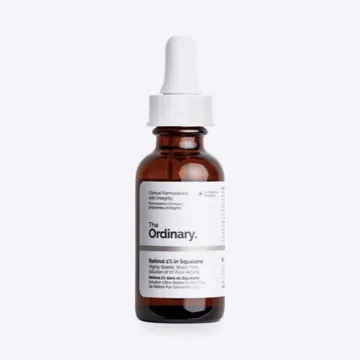
Retinol 1% in Squalane
Evening serum with retinol and squalane. Fragrance-free.
Suits: Normal, Dry, Oily, Combination skin
Resurfacing Retinol Serum
Buffered retinol aimed at post-acne marks and rough texture.
Suits: Oily, Combination, Normal skin
Niacinamide 10% + Zinc 1%
The cheapest proven way to calm shine and blur pore appearance.
Suits: Oily, Combination, Normal skin
From Pori's catalogue. Amazon links carry our Associates tag: Pori earns from qualifying purchases, at no cost to you. No brand pays to be listed. Photos: Open Beauty Facts contributors, CC BY-SA 3.0.
Drugstore vs luxury: which should you choose?
| Step | Save or splurge | What to check |
|---|---|---|
| Cleanser | Save | Gentle surfactants, no fragrance if you are sensitive |
| Moisturizer | Save, or splurge for texture | Ceramides, glycerin, occlusives that suit your skin type |
| Hydrating serum | Save | Hyaluronic acid or glycerin high on the list |
| Vitamin C | Optional splurge | Stated percentage, pH, airless or opaque packaging |
| Retinoid | Save | Stated strength; adapalene for acne |
| Sunscreen | Splurge if it helps you wear it daily | Broad spectrum, SPF 30 or higher, US Drug Facts label |
A mixed routine is usually the smartest. Our drugstore skincare routine builds a full routine from budget brands, and Clinique vs Kiehl's compares two prestige brands head to head. If you shop imports, our guides to French pharmacy brands and Korean skincare brands show who owns what there too, and our list of fragrance-free skincare brands helps if scent bothers your skin. Whatever you spend, add one product at a time and patch test it first.
Frequently asked questions
Is expensive skincare better than drugstore skincare?
Not as a rule. Active ingredients, their strength and daily use matter more than price. The American Academy of Dermatology says products do not need to be expensive to be effective.
Do luxury and drugstore brands have the same owners?
Often. L'Oréal owns L'Oréal Paris, Garnier and CeraVe as well as Lancôme, Kiehl's and SkinCeuticals. Estée Lauder owns The Ordinary as well as Clinique and La Mer.
What am I paying for with luxury skincare?
Mostly texture, packaging, fragrance, retail experience and marketing. Some prestige formulas use well-researched combinations, but similar key ingredients are usually available for less.
Where is it worth spending more on skincare?
On a sunscreen you like enough to wear every day, on a carefully formulated vitamin C serum if you want one, and on a dermatologist visit for acne, melasma or rosacea.
What skincare products should I buy cheap?
Cleansers, basic moisturizers, hyaluronic acid serums, niacinamide and retinol. Budget versions with stated percentages work as well as pricier ones.
Does 'dermatologist recommended' mean a product is better?
No. In a 2017 study of best-selling moisturizers, products with that claim cost a median of $0.79 per ounce against $0.59 for others. It is a marketing phrase and does not tell you how well a product works.
Sources
- American Academy of Dermatology: Skin care on a budget
- Xu S et al. Best-selling moisturizers, JAMA Dermatology 2017 (PubMed)
- Wikipedia: L'Oréal (brands by division)
- The Estée Lauder Companies: Our brands
- FashionUnited: Estée Lauder completes the acquisition of DECIEM
- FashionUnited: Unilever to acquire Paula's Choice
- Dermstore: SkinCeuticals
- Target: L'Oréal Paris Revitalift hyaluronic acid serum
- Lin FH et al. Ferulic acid stabilizes a solution of vitamins C and E, J Invest Dermatol 2005 (PubMed)
- American Academy of Dermatology: How to select a sunscreen
Pori is a wellness and skincare education app, not a medical device. This article is for general information and isn't medical advice. For anything that worries you, see a dermatologist.