Pori

- Drug Facts list petrolatum 41% as the active, with mineral oil, ceresin, lanolin alcohol, panthenol, glycerin and bisabolol.
- It's fragrance-free and preservative-free and suits cracked hands, chapped lips, chafing and minor cuts.
- Lanolin allergy is rare (under 0.5% of people, per DermNet) but more likely on eczema or broken skin; CeraVe Healing Ointment is a lanolin-free swap.
- $6.29 for 1.75 oz at Target as of November 2026, about $3.59 per oz.
Aquaphor Healing Ointment is a cheap, fragrance-free ointment that works well on cracked hands, chapped lips, dry patches and minor scrapes, because its 41% petrolatum forms a seal that keeps water in. It is the right buy if you want a strong barrier in a small tube. Skip it if you know you react to lanolin, since it contains lanolin alcohol, and use it sparingly on an oily or breakout-prone face.
Before you buy, you can scan the tube's barcode or label with the ingredient scanner in Pori to check its ingredients against your skin type and flag lanolin if you avoid it.
Below we go through the Drug Facts label, every inactive ingredient, the evidence for petrolatum, the lanolin question, who should buy it and who should skip it, sizes and price per ounce, how to use it, and four alternatives. We compared published ingredient lists, brand claims and listed prices; we did not test these products on skin.
What is Aquaphor Healing Ointment?
It's an over-the-counter skin protectant made by Beiersdorf. The DailyMed Drug Facts label lists its uses as temporarily protecting minor cuts, scrapes and burns, relieving chapped or cracked skin and lips, guarding skin against drying wind and cold, helping treat and prevent diaper rash, and protecting chafed skin. Aquaphor calls it preservative and fragrance free.
| Detail | Drug Facts and brand page |
|---|---|
| Active ingredient | Petrolatum 41% (skin protectant) |
| Inactive ingredients | Mineral oil, ceresin, lanolin alcohol, panthenol, glycerin, bisabolol |
| Texture | Ointment, no water in the formula |
| Brand claims | Fragrance-free, preservative-free; a brand answer on Ulta says it is non-comedogenic |
| Contains lanolin? | Yes, lanolin alcohol |
| Common sizes | 1.75 oz tube, 2.8 oz jar, 14 oz jar, plus travel packs |
| Price (November 2026) | $6.29 for 1.75 oz at Target, about $3.59 per oz |
What's in Aquaphor? The full ingredient list explained
The label is short. Here is each ingredient in the Drug Facts order:
- Petrolatum (41%): the active. It sits on top of skin and slows water loss, and it is what makes Aquaphor a skin protectant under US drug rules.
- Mineral oil: a light, refined oil that softens the petrolatum so it spreads.
- Ceresin: a mineral wax that thickens the ointment and helps it stay put.
- Lanolin alcohol: the alcohol fraction of lanolin, the wax from sheep's wool. It is an emollient and helps the ointment hold a little water. It is also the one ingredient here that some people are allergic to.
- Panthenol: provitamin B5, a humectant often used in soothing products.
- Glycerin: a humectant that draws water into the outer skin.
- Bisabolol: a soothing compound originally found in chamomile.
Panthenol, glycerin and bisabolol come after the oils and waxes, so they play a small role. Most of what you feel is petrolatum, mineral oil and wax. The DailyMed page also has an ingredients table that lists the same items in a slightly different order, and Aquaphor notes that the package is the final word on the formula.
Does petrolatum actually work?
Yes, for the jobs Aquaphor is sold for. Petrolatum is an occlusive: it forms a film that slows evaporation, so skin underneath stays more hydrated. The American Academy of Dermatology (AAD) says an ointment is the thickest of all moisturizers, making it the most effective in remedying dry skin, and that ointments and creams are more effective than lotions. For lips, it suggests lip balm or petroleum jelly.
For small wounds, the AAD advises using petroleum jelly to keep the wound moist, which stops a scab forming. It says wounds with scabs take longer to heal, and that as long as the wound is cleaned daily, antibacterial ointment isn't necessary. Aquaphor's 41% petrolatum ointment fits that advice, though plain petroleum jelly does too.
What petrolatum doesn't do is add water by itself. It works best over damp skin or over a water-based moisturizer, which is why the AAD suggests applying moisturizer when your skin is still damp after a shower or bath. Our guide to petrolatum, slugging and acne covers the face-specific questions.
Should you worry about the lanolin in Aquaphor?
Most people don't need to. DermNet estimates lanolin allergy affects fewer than 0.5% of the general population, and between 1.7% and 3.3% of people with dermatitis who are patch tested. It names free lanolin alcohols as the main sensitizers, which is the exact form Aquaphor uses.
The risk is higher on broken or inflamed skin. DermNet says people with broken or compromised skin due to pre-existing dermatitis, including eczema and leg ulcers, are more likely to become allergic, and that allergy is slightly more common in children and older adults. That matters because cracked skin and eczema patches are exactly where people reach for Aquaphor.
Practical rule: if a patch you treat with Aquaphor gets redder, itchier or spreads instead of settling, stop using it and see a dermatologist, who can patch test for lanolin. If you already know you react to lanolin or wool alcohols, choose a lanolin-free ointment from the alternatives below.
Who is Aquaphor Healing Ointment good for?
- Cracked hands, heels and knuckles: its main use, and where a thick seal helps most.
- Chapped lips: the label lists lips, and a brand answer on Ulta says it can be used on the lips and the area around them. Our best lip balm for chapped lips roundup compares it with sticks and balms.
- Minor cuts and scrapes: clean the wound first, as Target's listing advises, then apply a thin layer.
- Raw skin around the nose during a cold, and chafed skin.
- A final layer at night over a cream on very dry patches.
It also suits people who react to fragrance or preservatives, since the formula has neither.
Who should skip it?
- Anyone allergic to lanolin. Pick a lanolin-free option.
- Oily, acne-prone faces as an all-over layer. A brand answer on Ulta calls it non-comedogenic, but that term has no legal definition, and a heavy occlusive on an oily face is more than most people need. Spot-apply it to dry areas instead.
- Deep, large or infected wounds and serious burns. See a doctor for these.
- The eye area. The label says do not get into eyes, and a brand answer on Ulta says it is not intended for use on the eyelashes.
Eczema is a judgment call. Ointments are one of the emollient types the NHS lists for atopic eczema, but given the lanolin point above, people with active eczema may do better with a lanolin-free product.
How much does Aquaphor cost, and what sizes are there?
| Size | Price (November 2026) | Per ounce |
|---|---|---|
| 1.75 oz tube | $6.29 (Target) | About $3.59 |
| 2.8 oz jar | $10.49 (Ulta) | About $3.75 |
| 14 oz jar | Price varies by retailer | Usually the lowest per ounce |
The tube is the better choice for lips and faces, since you don't put fingers into it. If you use a jar, the NHS advice for emollient pots applies: use a spoon or pump dispenser instead of your fingers. Aquaphor also sells a baby version and an Advanced Therapy label on some packs; check the Drug Facts box to confirm you're buying the same 41% petrolatum formula.
How do you use Aquaphor Healing Ointment?
- Start with damp skin or apply over your usual moisturizer, so there is water to seal in.
- Use a thin layer. A little covers a lot; more just feels greasy.
- For cuts, clean the area, then apply a thin layer and cover if needed. Reapply as the label says, as needed.
- For hands and feet at night, apply, then wear cotton gloves or socks.
- Keep it off fabric you care about and away from flames. The NHS warns that emollients on dressings, clothing and bedding can catch fire more easily, and says not to smoke or go near naked flames when using them.
What are the best alternatives to Aquaphor?
- CeraVe Healing Ointment: 46.5% petrolatum with ceramides, cholesterol and hyaluronic acid, and CeraVe says it is made without lanolin, dyes or fragrance. It carries the National Eczema Association (NEA) Seal and lists at $20.99 on cerave.com. The best swap if lanolin is your concern.
- Plain petroleum jelly: usually a single ingredient with no lanolin, and it gives the same kind of seal.
- La Roche-Posay Cicaplast Balm B5: a lighter balm with panthenol and dimethicone that rubs in more easily on the face; see our Cicaplast Balm B5 review.
- CeraVe Moisturizing Cream: if you want an everyday moisturizer, this fragrance-free cream adds ceramides and petrolatum in a texture you can use all over. Our CeraVe Moisturizing Cream review has the details.
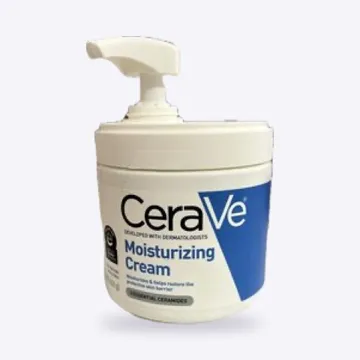
Moisturizing Cream
Thick ceramide cream for skin that dries out by midday.
Suits: Dry, Normal, Sensitive skin
From Pori's catalogue. Amazon links carry our Associates tag: Pori earns from qualifying purchases, at no cost to you. No brand pays to be listed. Photos: Open Beauty Facts contributors, CC BY-SA 3.0.
Vanicream's Moisturizing Ointment is petrolatum-free and lanolin-free, but Vanicream's page says it is out of stock while being reformulated. For more options, see our best barrier repair cream roundup, the Vanicream Moisturizing Cream review and the moisturizers for dry skin catalogue.
Is Aquaphor Healing Ointment worth it?
Yes, for most people. At about $3.59 an ounce in the small tube, it's an inexpensive, fragrance-free, preservative-free way to protect cracked skin, chapped lips and small scrapes, and the evidence for petrolatum is solid. The one real caveat is lanolin alcohol: rare as lanolin allergy is, it is more likely on the damaged skin Aquaphor is meant for. If a treated patch gets worse, switch to a lanolin-free ointment and get it checked. If your skin keeps cracking despite good care, our guide to a damaged skin barrier and a visit to a dermatologist are the next steps.
Frequently asked questions
What is the active ingredient in Aquaphor Healing Ointment?
Petrolatum 41%, listed as a skin protectant. The inactive ingredients are mineral oil, ceresin, lanolin alcohol, panthenol, glycerin and bisabolol.
Does Aquaphor contain lanolin?
Yes. It contains lanolin alcohol. Lanolin allergy is uncommon, but people with eczema or broken skin are more likely to react. If you know you're allergic, choose a lanolin-free ointment such as CeraVe Healing Ointment or plain petroleum jelly.
Can I put Aquaphor on my face?
A brand answer on Ulta says it can be used on the face, and it works well on dry patches, around the nose and on the lips. On an oily or acne-prone face, apply it only where skin is dry, and keep it out of your eyes.
Is Aquaphor better than Vaseline?
They do the same main job, sealing in water. Aquaphor adds mineral oil, wax, lanolin alcohol, panthenol, glycerin and bisabolol and feels a little softer. Plain petroleum jelly is usually a single ingredient with no lanolin.
Can you use Aquaphor on cuts?
Yes, on minor cuts, scrapes and burns, which are listed uses on its label. Clean the wound first. The AAD says keeping a small wound moist with petroleum jelly helps it heal. See a doctor for deep, large or infected wounds.
Is Aquaphor good for eczema?
It can help seal dry patches, but it contains lanolin alcohol, and lanolin allergy is more likely on eczema-affected skin. Many people with eczema prefer a lanolin-free emollient. See a dermatologist if eczema keeps flaring.
Sources
- DailyMed: Aquaphor Healing (petrolatum ointment) Drug Facts label
- Aquaphor: Healing Ointment (brand page)
- Target: Aquaphor Healing Ointment 1.75 oz (price, listing)
- Ulta: Aquaphor Healing Ointment Jar (price, brand answers)
- DermNet: Contact reactions to lanolin
- American Academy of Dermatology: Proper wound care, how to minimize a scar
- American Academy of Dermatology: Dermatologists' tips to relieve dry skin
- American Academy of Dermatology: How to pick the right moisturizer
- NHS: Atopic eczema treatment
- CeraVe: Healing Ointment (ingredients and claims)
Pori is a wellness and skincare education app, not a medical device. This article is for general information and isn't medical advice. For anything that worries you, see a dermatologist.