Pori

- Differin Gel is the best overall pick: the AAD says a retinoid or salicylic acid can make mild scarring less noticeable.
- Paula's Choice 2% BHA, CeraVe Resurfacing Retinol and The Ordinary Glycolic Acid 7% Toner smooth mild texture.
- Azelaic acid, tranexamic acid and daily sunscreen fade the flat brown marks most people call scars.
- Indented and raised scars need in-office treatment: peels, lasers, microneedling, fillers, surgery or injections.
The best products for acne scars are retinoids and exfoliating acids, which can soften mild, shallow scarring and fade the flat marks acne leaves behind: Differin Adapalene Gel 0.1% is our best overall pick, Paula's Choice 2% BHA Liquid Exfoliant is the best salicylic acid, and CeraVe Resurfacing Retinol Serum is the best gentle retinol. Be realistic: deep indented scars such as ice pick, boxcar and rolling scars do not go away with skincare, and need in-office treatment from a dermatologist.
Before you buy, you can scan a product's barcode or label with the ingredient scanner in Pori to check it against your skin type and see which actives it contains. Pori reads the ingredient list for you; it does not diagnose scars or tell you which kind you have.
Quick picks
- Best overall: Differin Adapalene Gel 0.1% ($13.49 for 15 g, Target): a retinoid that treats acne and helps mild texture.
- Best salicylic acid: Paula's Choice Skin Perfecting 2% BHA Liquid Exfoliant ($37 for 4 oz, paulaschoice.com): the AAD names salicylic acid for mild scarring.
- Best gentle retinol: CeraVe Resurfacing Retinol Serum ($16.49 for 1 fl oz, Target): encapsulated retinol made for post-acne marks.
- Best budget exfoliant: The Ordinary Glycolic Acid 7% Exfoliating Toner ($9, theordinary.com): glycolic acid for rough texture.
- Best for brown marks: The Ordinary Azelaic Acid Suspension 10% ($12.20 for 30 ml, theordinary.com): fades dark marks and calms breakouts.
- Best prevention: COSRX Acne Pimple Master Patch ($6.99 for 24, cosrx.com): stops picking, a common cause of scars.
We compared published ingredient lists, brand claims and listed prices; we did not test these products on skin. Prices are as of November 2026 with the retailer named. If you only want a serum, see our best serums for acne scars. Most "acne scar" products online are really for marks: brown spots (post-inflammatory hyperpigmentation) and red spots (post-inflammatory erythema) that are flat and fade. True scars change the skin's surface. Our guide to the types of acne scars shows how to tell them apart, and do acne scars go away? covers timelines.
How do the best products for acne scars compare?
| Product | Helps with | Key ingredients | Skin type | Price (November 2026) |
|---|---|---|---|---|
| 1. Differin Adapalene Gel 0.1% | Mild texture, new breakouts | Adapalene 0.1% | Acne-prone, ages 12 and up | $13.49 for 15 g (Target) |
| 2. Paula's Choice 2% BHA Liquid Exfoliant | Mild texture, clogged pores | Salicylic acid 2% | Oily, combination | $37 for 4 oz (paulaschoice.com) |
| 3. CeraVe Resurfacing Retinol Serum | Marks, mild texture | Encapsulated retinol, niacinamide, licorice root | Oily, combination | $16.49 for 1 fl oz (Target) |
| 4. Paula's Choice CLINICAL 0.3% Retinol + 2% Bakuchiol | Texture, a step up | Retinol 0.3%, bakuchiol 2%, peptides | Most, after a first retinoid | $65 for 1 fl oz (Dermstore) |
| 5. The Ordinary Glycolic Acid 7% Exfoliating Toner | Rough texture, dullness | Glycolic acid, aloe | Normal to oily | $9 (theordinary.com) |
| 6. Paula's Choice 6% Mandelic Acid + 2% Lactic Acid | Texture on sensitive or deeper skin | Mandelic acid 6%, lactic acid 2% | Sensitive, all tones | $37 for 3 fl oz (paulaschoice.com) |
| 7. The Ordinary Azelaic Acid Suspension 10% | Brown marks, breakouts | Azelaic acid 10% | Normal to oily | $12.20 for 30 ml (theordinary.com) |
| 8. Naturium Tranexamic Topical Acid 5% | Brown marks | Tranexamic acid, kojic acid, niacinamide | All, including sensitive | $20.99 for 1 fl oz (Target) |
| 9. EltaMD UV Clear SPF 46 | Keeping marks from darkening | Zinc oxide 9%, octinoxate 7.5%, niacinamide | Oily, acne-prone | $45 (Mayo Clinic Store) |
| 10. COSRX Acne Pimple Master Patch | Preventing new scars | Hydrocolloid | Any, surfaced pimples | $6.99 for 24 (cosrx.com) |
The 10 best products for acne scars
1. Differin Adapalene Gel 0.1%
Price: $13.49 for 15 g at Target, as of November 2026. Key ingredients: adapalene 0.1%, an over-the-counter retinoid. The American Academy of Dermatology (AAD) says a retinoid can make mild acne scarring less noticeable, and a retinoid also stops the breakouts that cause new scars. In a trial, a stronger prescription gel of adapalene 0.3% with benzoyl peroxide reduced atrophic scar counts over six months.
Who it suits: anyone still breaking out who has shallow scars or marks. Who should skip it: anyone pregnant or trying to conceive. The catch: results take months, and early dryness is common. See our Differin guide.
2. Paula's Choice Skin Perfecting 2% BHA Liquid Exfoliant
Price: $37 for 4 oz on paulaschoice.com. Key ingredients: 2% salicylic acid with green tea extract. The AAD names salicylic acid, with retinoids, as the at-home options for mild scarring.
Who it suits: oily skin with shallow texture and clogged pores. Who should skip it: dry or very sensitive skin, and people allergic to aspirin. The catch: it smooths the surface; it cannot lift a scar from below.
3. CeraVe Resurfacing Retinol Serum
Price: $16.49 for 1 fl oz at Target. Key ingredients: encapsulated retinol, niacinamide, ceramides and licorice root extract. CeraVe made it for post-acne marks and texture.
Who it suits: people who want a milder retinoid than Differin. Who should skip it: anyone already on Differin or a prescription retinoid. The catch: no stated strength. Read our full review.
Resurfacing Retinol Serum
Buffered retinol aimed at post-acne marks and rough texture.
Suits: Oily, Combination, Normal skin
From Pori's catalogue. Amazon links carry our Associates tag: Pori earns from qualifying purchases, at no cost to you. No brand pays to be listed. Photos: Open Beauty Facts contributors, CC BY-SA 3.0.
4. Paula's Choice CLINICAL 0.3% Retinol + 2% Bakuchiol Treatment
Price: $65 for 1 fl oz at Dermstore. Key ingredients: 0.3% retinol, 2% bakuchiol and peptides, with stated percentages.
Who it suits: people whose acne is under control and who have used a gentler retinol without trouble. Who should skip it: first-time retinoid users and tight budgets. The catch: the price, and it is a cosmetic, not an acne drug like Differin.
5. The Ordinary Glycolic Acid 7% Exfoliating Toner
Price: $9 on theordinary.com. Key ingredients: glycolic acid with aloe. Glycolic acid is also the basis of many in-office peels, at far higher strengths.
Who it suits: normal to oily skin with rough texture. Who should skip it: sensitive skin, and nights you use a retinoid. The catch: start two or three nights a week. Our glycolic acid guide explains why.
6. Paula's Choice Skin Perfecting 6% Mandelic Acid + 2% Lactic Acid Liquid Exfoliant
Price: $37 for 3 fl oz on paulaschoice.com. Key ingredients: 6% mandelic acid and 2% lactic acid. Mandelic acid is a larger molecule than glycolic acid and tends to be gentler.
Who it suits: sensitive skin, and deeper skin tones prone to dark marks after irritation. Who should skip it: people already using another acid. The catch: gentle also means slower. See mandelic acid for acne and dark skin.
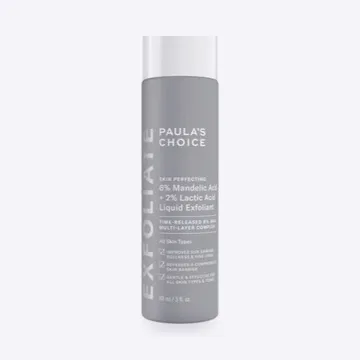
Skin Perfecting 6% Mandelic Acid + 2% Lactic Acid Liquid Exfoliant
Exfoliant with mandelic acid and lactic acid. Fragrance-free.
Suits: Normal, Dry, Oily, Combination, Sensitive skin
From Pori's catalogue. Amazon links carry our Associates tag: Pori earns from qualifying purchases, at no cost to you. No brand pays to be listed. Photos: Open Beauty Facts contributors, CC BY-SA 3.0.
7. The Ordinary Azelaic Acid Suspension 10%
Price: $12.20 for 30 ml on theordinary.com. Key ingredients: 10% azelaic acid. It fades brown post-acne marks and calms active breakouts.
Who it suits: people whose "scars" are mostly flat brown marks. Who should skip it: anyone who dislikes a thick, silicone-rich texture. The catch: it does nothing for indented scars. Read our full review.
8. Naturium Tranexamic Topical Acid 5%
Price: $20.99 for 1 fl oz at Target. Key ingredients: tranexamic acid, kojic acid, niacinamide and licorice root.
Who it suits: sensitive skin with brown marks that cannot handle acids. Who should skip it: people with red marks only, which respond to different care. The catch: most tranexamic acid research is in melasma. For more brown-mark options, see the best products for hyperpigmentation.
9. EltaMD UV Clear SPF 46
Price: $45 at the Mayo Clinic Store. Key ingredients: zinc oxide 9% and octinoxate 7.5%, with niacinamide. Sun darkens brown marks and makes red marks last longer, and retinoids and acids make skin more sun-sensitive.
Who it suits: oily, acne-prone skin. Who should skip it: people who want a tint; the tinted version is listed in our tinted sunscreen roundup. The catch: the price, for a step you use every day.
10. COSRX Acne Pimple Master Patch
Price: $6.99 for 24 on cosrx.com. Key ingredients: hydrocolloid, drug-free, in three sizes.
Who it suits: anyone who picks. Picking and squeezing push inflammation deeper, which raises the odds of a scar, and a patch keeps fingers off. Who should skip it: deep, painful bumps with no head, which patches do not reach. The catch: it is prevention, not a fix for existing scars. More in the best pimple patches.
What can skincare do for acne scars, and what can't it?
Skincare works on the surface. It can fade flat brown and red marks, smooth mild roughness, and prevent new scars by controlling acne. It cannot fill in a depression or flatten a raised scar. The AAD notes that scars rarely go away completely on their own, and that dermatologists treat them in the office:
- Depressed (atrophic) scars: chemical peels, laser resurfacing, microneedling (often with platelet-rich plasma), radiofrequency microneedling, fillers, and scar surgery that lifts or removes the scar.
- Raised (hypertrophic) scars and keloids: corticosteroid injections, laser, and for keloids also surgery or freezing, often combined.
The single best thing you can do at home is treat active acne early, especially deep, painful breakouts. Our guide to treating cystic acne covers that.
Which acne scar treatments need a prescription or a dermatologist?
- Tretinoin and tazarotene: prescription retinoids stronger than Differin; see what to know about tretinoin.
- Adapalene 0.3% with benzoyl peroxide 2.5%: the prescription gel used in the scar trial above.
- Isotretinoin: for severe or scarring acne, to stop new scars forming.
- Procedures: everything in the list above. On deeper skin tones, choose a dermatologist experienced with your skin type, since some lasers and peels can cause dark marks.
When should you see a dermatologist about acne scars?
- You can see indents or raised scars, not just flat color.
- You still get deep, painful or cystic acne, which is the type most likely to scar.
- A scar is growing beyond the original spot, itches or hurts, which can be a keloid.
- Six months of a retinoid and sunscreen have not changed flat marks.
You can find one near you in our dermatologist directory.
How we chose
We built the list from the AAD's acne scar pages: a retinoid or salicylic acid for mild scarring, sunscreen, and early acne treatment to prevent new scars. We added exfoliating acids and brown-mark faders because most people searching for scar products also have marks. Every pick is sold by a major US retailer with a published ingredient list. We did not test these products on skin, and no brand paid for a place.
Frequently asked questions
What is the best product for acne scars?
For mild, shallow scarring, a retinoid such as Differin Adapalene Gel 0.1% or a salicylic acid exfoliant such as Paula's Choice 2% BHA Liquid Exfoliant. The AAD names both. Deep scars need in-office treatment.
Can over-the-counter products get rid of acne scars?
They can fade flat marks and soften mild texture, but they cannot fill indented scars such as ice pick, boxcar or rolling scars, or flatten raised scars. Those need a dermatologist.
Does retinol help acne scars?
It can help mild texture and post-acne marks over months. Adapalene, sold as Differin, also treats acne itself, which prevents new scars. Avoid all retinoids during pregnancy.
What is the difference between acne scars and dark spots?
Dark spots are flat changes in color, brown or red, that usually fade over months. Scars change the skin's surface, either as dips or raised bumps, and rarely go away on their own.
How long does it take for acne scar products to work?
Expect three to six months of steady use to judge a retinoid or acid. Flat brown marks often fade within 6 to 12 months, faster with treatment and sunscreen.
What do dermatologists use for deep acne scars?
Laser resurfacing, chemical peels, microneedling, radiofrequency, fillers and scar surgery for indented scars; corticosteroid injections, laser, surgery or freezing for raised scars and keloids.
Sources
- American Academy of Dermatology: Acne scars: Diagnosis and treatment
- American Academy of Dermatology: Acne scars: Overview
- American Academy of Dermatology: Acne scars: Signs and symptoms
- DermNet: Acne scarring
- Dreno B et al. Prevention and reduction of atrophic acne scars with adapalene 0.3%/benzoyl peroxide 2.5% gel. Am J Clin Dermatol, 2018 (PubMed)
- Fabbrocini G et al. Acne scars: pathogenesis, classification and treatment. Dermatol Res Pract, 2010 (PubMed)
- Differin: Adapalene Gel 0.1%
- American Academy of Dermatology: How to fade dark spots in darker skin tones
Pori is a wellness and skincare education app, not a medical device. This article is for general information and isn't medical advice. For anything that worries you, see a dermatologist.