Pori
- Glabridin in licorice slows tyrosinase and calms inflammation, so licorice can brighten and soothe at the same time.
- Human evidence is small: a 20-woman liquiritin melasma study and an 8-week licochalcone A redness study run by the manufacturer.
- Licorice isn't on the AAD's list of over-the-counter dark spot ingredients, so treat it as a gentle supporting ingredient next to a proven fader.
- Look for Glycyrrhiza Glabra Root Extract, Glycyrrhiza Inflata Root Extract or Dipotassium Glycyrrhizate on the label, and wear SPF daily.
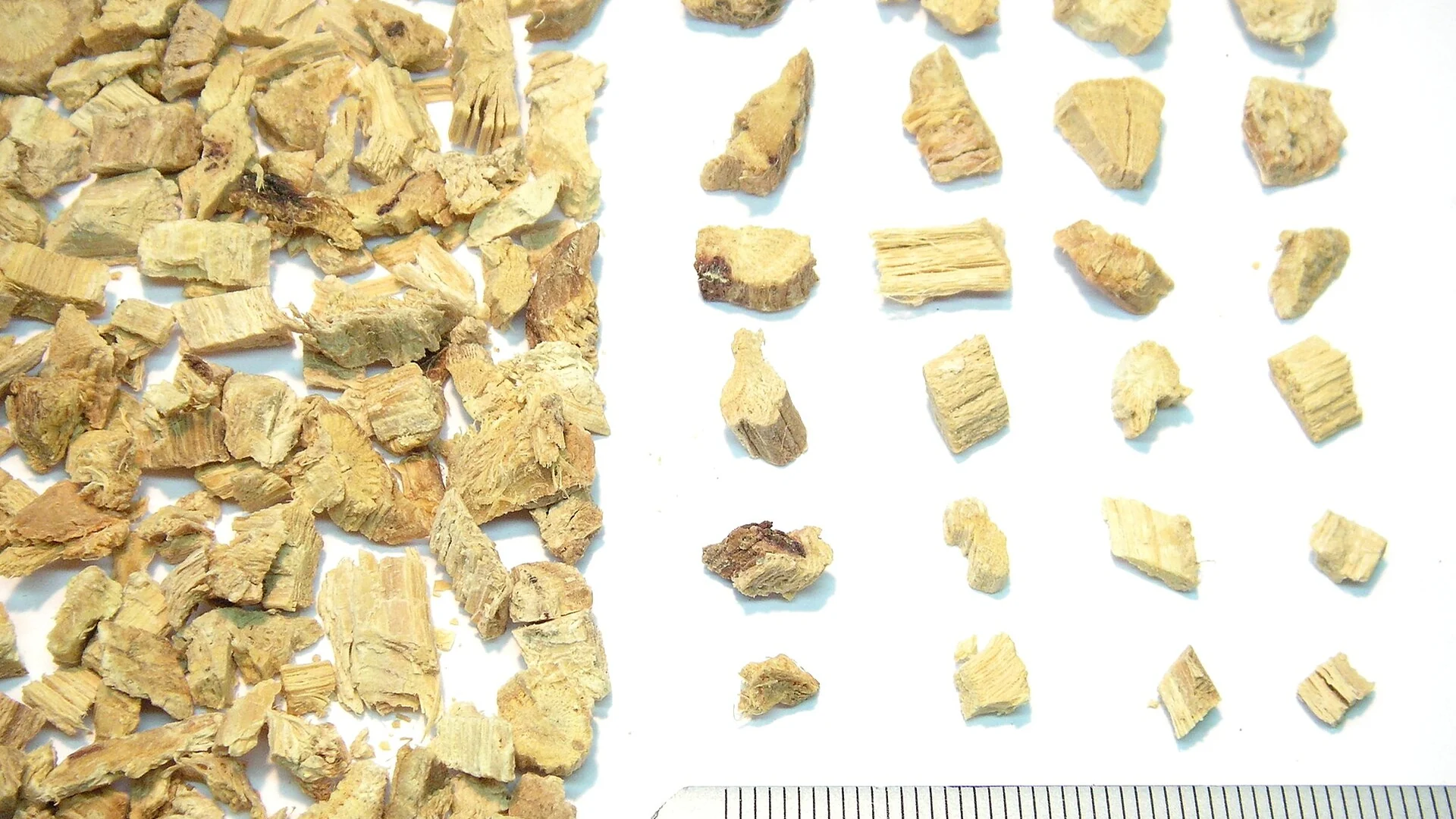
Licorice root extract is a botanical that can help skin in two ways at once. Its glabridin slows tyrosinase, the enzyme behind melanin, and calms inflammation, while related compounds such as liquiritin and licochalcone A have been tested for melasma and facial redness. The human evidence is small, so licorice works best as a gentle supporting brightener for skin that can't tolerate stronger actives.
Below: what each licorice compound does, how strong the evidence really is for dark spots and redness, how it compares with vitamin C, the names it hides under on an ingredient list, and how to fit it into a routine.
What does licorice root extract do for skin?
Licorice extract works on pigment and on inflammation. A review of cosmeceuticals for hyperpigmentation describes it as dispersing melanin, inhibiting melanin production and blocking cyclooxygenase activity, an inflammatory pathway. The same review is careful to add that more studies are needed to prove its depigmenting effect in people.
Most of what we know about the main active, glabridin, comes from one lab study. Researchers found that glabridin inhibited tyrosinase in cultured pigment cells at 0.1 to 1.0 micrograms per milliliter without harming the cells, and that a 0.5% glabridin solution applied to guinea pig skin reduced both the tanning and the redness caused by UVB light. It also suppressed superoxide (a free radical) and cyclooxygenase activity in the test tube. That combination of brightening plus calming is why licorice keeps appearing in products for sensitive, uneven skin.
It's worth being clear about the gap here. Cell and animal results show a compound is plausible. They can't predict how much a cream with a fraction of a percent of extract will change your face in eight weeks.
What are glabridin, liquiritin and licochalcone A?
They are different molecules from licorice plants, and they have been studied for different things. Product labels rarely tell you which ones are present or in what amount, so it helps to know what each one is supposed to do.
| Compound | Source | Main use studied | Best human evidence |
|---|---|---|---|
| Glabridin | Oil-soluble fraction of Glycyrrhiza glabra root | Brightening, anti-inflammatory | Mostly lab and animal work; 0.5% reduced UVB pigmentation and redness in guinea pigs |
| Liquiritin | Licorice root flavonoid | Melasma | A split-face study of 20 women with epidermal melasma using liquiritin cream vs a plain cream twice daily for 4 weeks |
| Licochalcone A | Glycyrrhiza inflata root | Redness, irritation | 62 people with mild to moderate facial redness, 8 weeks on a four-product regimen (manufacturer-run) |
| Glycyrrhizic acid and its salts (e.g., dipotassium glycyrrhizate) | Licorice root | Skin conditioning, soothing | Safety data; used in cosmetics at up to 1% for dipotassium glycyrrhizate |
Two of those human studies come with caveats. The liquiritin trial was small and short, and the licochalcone A study was run by the company that makes the products, with no comparison group. Both are reasons to keep expectations modest.
Does licorice extract work for hyperpigmentation?
It may help, but it isn't a first-line dark spot treatment. The American Academy of Dermatology's guide to fading dark spots lists azelaic acid, glycolic acid, kojic acid, a retinoid or vitamin C as the over-the-counter ingredients to look for. Licorice isn't on that list. Dermatology reviews do include licorice extract among the topical alternatives to hydroquinone, alongside arbutin, kojic acid, soy and vitamin C, which places it in the gentler, supporting tier.
Licorice fits best in a routine that pairs it with a better-studied brightener, such as vitamin C, azelaic acid or niacinamide, so you get its soothing effect while the stronger ingredient does most of the fading.
Whatever you use, sunscreen does the heavy lifting. The AAD says effective treatment for dark spots begins with sunscreen, ideally a tinted one with iron oxide to block visible light, and that a spot a few shades darker than your skin usually fades within 6 to 12 months once the cause is stopped. Deeper pigment can take years. For the full playbook, see our guide on how to fade dark spots.
What about melasma?
Melasma is a medical condition, and there's no single best treatment for it; dermatologists usually combine sun protection with prescription creams and sometimes procedures. The liquiritin study is one reason licorice appears in melasma-marketed products, but four weeks in 20 people doesn't make it a replacement for care. If you have symmetrical brown patches on your cheeks, forehead or upper lip, see a dermatologist before building a routine around botanicals.
Can licorice root help with redness?
Licorice is one of the better-supported botanicals for redness, mainly through licochalcone A. In the 8-week regimen study, people with mild to moderate facial redness, including rosacea, saw significant improvements in average redness scores at 4 and 8 weeks and reported better quality of life. The regimen also included tinted products to neutralize redness, which makes it hard to separate the ingredient's effect from the makeup's. The authors noted it was compatible with daily metronidazole treatment.
The glabridin animal work points the same way: the 0.5% solution reduced UVB-triggered redness as well as tanning. And the U.S. National Center for Complementary and Integrative Health says preliminary evidence suggests topical licorice gels might help eczema symptoms, while adding that more research is needed.
Licorice won't treat rosacea on its own. If your face flushes easily, burns or develops bumps, the AAD's advice is to choose products made for sensitive skin, cleanse gently and protect your skin from the sun year-round, and a dermatologist can prescribe treatment. Our guide to why your face is red walks through the common causes.
Licorice vs vitamin C: which is better for brightening?
Vitamin C is the one dermatologists recommend for dark spots; licorice is the gentler, less proven option. They do different jobs, and plenty of products use both.
| Licorice root extract | Vitamin C | |
|---|---|---|
| How it brightens | Slows tyrosinase, disperses melanin, calms inflammation | Antioxidant that can fade spots and slow melanin production |
| AAD over-the-counter dark spot list | Not listed | Listed |
| Human evidence for licorice | Small, short studies, some industry-run | Recommended by the AAD for fading dark spots |
| Extra benefit | Anti-redness, soothing | Antioxidant support under sunscreen |
| Best for | Sensitive or redness-prone skin, or as a support ingredient | People whose skin tolerates it and who want the better-studied option |
If vitamin C serums sting or flare your skin, a licorice product is a reasonable thing to try instead. If your skin is fine with vitamin C, the two can sit in the same routine. Our vitamin C serum guide covers the different forms.
Where does licorice show up on an ingredient label?
Look for the plant name first. Licorice usually appears as one of these INCI names:
- Glycyrrhiza Glabra (Licorice) Root Extract: the most common form; glabridin is part of this extract.
- Glycyrrhiza Inflata Root Extract: the species that supplies licochalcone A.
- Glabridin: sometimes listed on its own when a purified form is used.
- Dipotassium Glycyrrhizate, Ammonium Glycyrrhizate, Glycyrrhizic Acid, Glycyrrhetinic Acid, Stearyl Glycyrrhetinate: soothing salts and derivatives that a safety panel found used at concentrations from 0.1% up to 5% depending on the compound.
Position matters. U.S. cosmetics list ingredients in descending order of predominance, so a licorice extract near the end of a long list is likely present in a small amount. That isn't automatically a problem, since glabridin was active in the lab at tiny concentrations, but a product that leads its marketing with licorice and lists it after the preservatives is mostly selling a story. Our guide on how to read skincare ingredient labels explains the rest of the list.
Who should choose licorice over stronger brighteners?
Licorice makes the most sense for people whose skin reacts to the usual options. That includes:
- Sensitive or redness-prone skin that stings with acids, retinoids or high-strength vitamin C.
- People who want a brightening step in a routine that already includes a retinoid or exfoliant, and don't want to stack two irritating actives.
- Anyone looking for a soothing support ingredient after a procedure or a flare, once their dermatologist says it's fine.
A few cautions apply. The NCCIH notes that topical licorice may be safe in the short term but can irritate some people's skin. On pregnancy, its warning concerns eating large amounts: about 250 grams of licorice a week by mouth is unsafe in pregnancy, and little is known about breastfeeding. There is no comparable data for skin creams, so ask your obstetrician or dermatologist before adding anything new while pregnant.
How do you add licorice extract to a routine?
- Patch test first. The AAD suggests applying a new product to a quarter-sized spot twice daily for 7 to 10 days, somewhere it won't be rubbed off, such as the inside of your elbow.
- Use it after cleansing, before moisturizer. Licorice usually comes in serums, essences and moisturizers, so it follows the normal thin-to-thick order.
- Wear broad-spectrum SPF 30 or higher every day. Without it, any brightener is working against ongoing sun exposure.
- Give it 8 to 12 weeks. The studies above ran 4 to 8 weeks, and the AAD's fading timeline runs in months.
How can an ingredient scanner help?
Licorice is easy to miss on a label because it hides under Latin plant names and salt forms. The Pori app's ingredient scanner (part of Pro) lets you scan a barcode or photograph the ingredient list, then flags each ingredient as beneficial, use with caution or avoid for your skin type, using fixed rules over a curated list of about 250 INCI ingredients. That makes it quicker to spot whether a "brightening" serum actually contains licorice or something harsher sitting next to it. A selfie scan also tracks Pigmentation & Tone over time, so you can see whether a product is changing anything across a few months.
An app is not a diagnosis. It can't tell melasma from sun spots or judge whether a dark patch needs a dermatologist, so get anything new, changing or stubborn checked in person.
Frequently asked questions
What does licorice root extract do for your skin?
It can help even out tone and calm redness. Its main compound, glabridin, slows tyrosinase (the enzyme behind melanin) and has anti-inflammatory effects in lab studies.
Is licorice extract good for hyperpigmentation?
It may help a little, but the human evidence is small. Dermatologists usually start with sunscreen plus better-studied ingredients like azelaic acid, vitamin C, kojic acid or a retinoid, and licorice works well alongside them.
Does licorice root help with redness and rosacea?
Licochalcone A from licorice improved facial redness scores in an 8-week study of people with mild to moderate redness. It can support a rosacea routine, but it doesn't replace treatment from a dermatologist.
Is licorice better than vitamin C for brightening?
Vitamin C is on the AAD's list of over-the-counter dark spot ingredients. Licorice is gentler and also soothes redness, so it's a good alternative for skin that reacts to vitamin C.
Is licorice extract safe in pregnancy?
Warnings about licorice in pregnancy concern eating large amounts, and there is little data on skin creams. Check with your obstetrician or dermatologist before adding a new product while pregnant.
How long does licorice extract take to work?
Plan on at least 8 to 12 weeks of daily use with sunscreen. Studies ran 4 to 8 weeks, and the AAD notes that dark spots usually take 6 to 12 months to fade.
Sources
- Yokota T et al. The inhibitory effect of glabridin from licorice extracts on melanogenesis and inflammation. Pigment Cell Res, 1998 (PubMed)
- Amer M, Metwalli M. Topical liquiritin improves melasma. Int J Dermatol, 2000 (PubMed)
- Weber TM et al. Skin tolerance, efficacy, and quality of life of patients with red facial skin using a skin care regimen containing Licochalcone A. J Cosmet Dermatol, 2006 (PubMed)
- Sarkar R et al. Cosmeceuticals for hyperpigmentation: what is available? J Cutan Aesthet Surg, 2013 (PMC)
- Cosmetic Ingredient Review. Safety assessment of glycyrrhetinic acid, glycyrrhizic acid and their salts. Int J Toxicol, 2007 (PubMed)
- American Academy of Dermatology: How to fade dark spots
- NCCIH: Licorice root
- American Academy of Dermatology: How to test skin care products
Pori is a wellness and skincare education app, not a medical device. This article is for general information and isn't medical advice. For anything that worries you, see a dermatologist.