Pori
- In small trials, 2% to 5% green tea lotions and 1% EGCG reduced oil and acne lesions over 6 to 8 weeks.
- Green tea applied before UV reduced sunburn redness and DNA damage in volunteers, but it doesn't replace sunscreen.
- On labels it's Camellia Sinensis Leaf Extract; leaf water and seed oil are different things, and position on the list hints at the amount.
- Brewed tea has no known dose or preservative, so DIY tea bags won't reproduce what the formulated products did.
Topical green tea has small but fairly consistent evidence behind it. In small trials, lotions with 2% to 5% green tea extract or 1% EGCG, its main polyphenol, reduced facial oil and acne lesions over 6 to 8 weeks, and extract applied before UV exposure reduced sunburn redness. It's a useful antioxidant helper for oily, acne-prone skin that works alongside sunscreen and acne treatment.
Here's what the studies actually tested, how to tell a meaningful green tea product from a label decoration, and why rubbing a used tea bag on your face isn't the same thing.
What does green tea do for skin?
Green tea's skin effects come from its polyphenols, mainly catechins, and the most studied one is epigallocatechin-3-gallate (EGCG). A review of tea polyphenols notes they have antimicrobial, anti-inflammatory and antioxidant properties, and lab work on sebum-producing cells found that EGCG reduced oil production, dampened inflammatory signaling and lowered the viability of acne bacteria. That touches several of the main drivers of acne at once, which is why the ingredient gets so much attention.
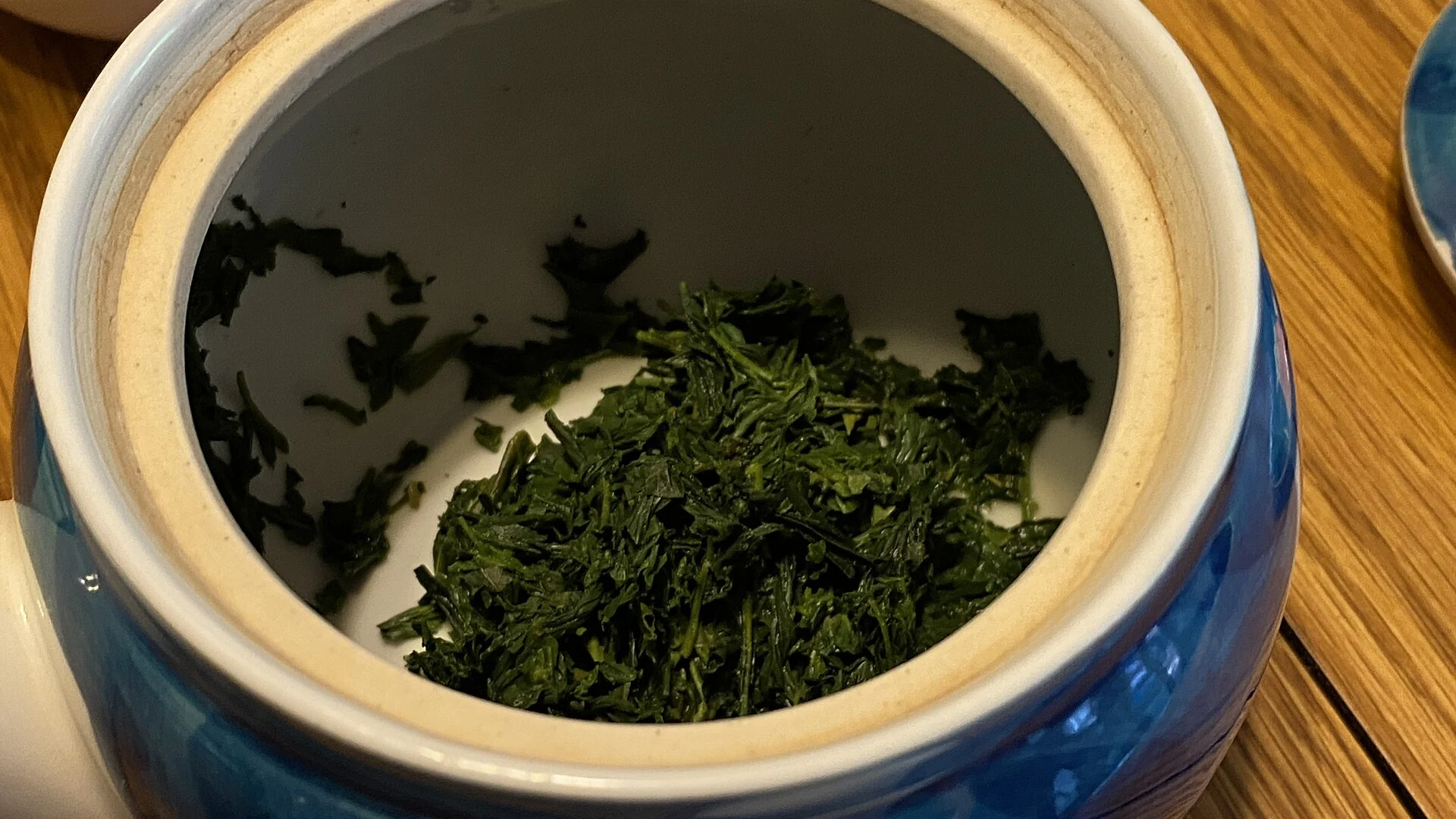
Green, black and oolong tea all come from the same plant, Camellia sinensis. According to the National Center for Complementary and Integrative Health (NCCIH), green tea is steamed, pan fried and dried but not fermented, while black tea is fermented. That processing difference matters, because the studies below used green tea or isolated EGCG specifically.
Does green tea reduce oily skin?
Two small studies suggest topical green tea can lower sebum over a couple of months. In a placebo-controlled split-face study, 11 healthy men who applied a 5% green tea cream at bedtime saw it cut sebum by 27% compared with placebo after 60 days. In an earlier study, 10 men who applied a 3% green tea emulsion to their cheeks for 8 weeks had a statistically significant drop in sebum; the review describes the decrease as nearly 10% in the first week and as much as 60% by week 8, though that study had no placebo comparison.
Both studies were small, both enrolled only men without skin disease, and both measured oil with a device rather than looking at breakouts. Still, the direction is consistent. If you have oily skin, green tea is a reasonable ingredient to look for in a light moisturizer or toner, alongside the basics in our oily skin routine.
Is green tea extract good for acne?
There's some evidence it helps mild to moderate acne. A 2016 review found eight relevant studies and concluded that topical tea polyphenols may be beneficial for reducing sebum and treating acne, while calling for larger, higher-quality trials. Here's what the acne studies used:
| Study | What was applied | People and length | Result |
|---|---|---|---|
| Elsaie et al., 2009 | 2% green tea lotion, twice daily | 20 patients, 6 weeks, no control group | Average lesion count fell from 24 to 10 (about 58%) |
| Sharquie et al., 2008 (via review) | 2% tea lotion vs 5% zinc sulfate, twice daily | 47 people aged 13 to 27, 2 months | Tea lotion significantly reduced papules and pustules; zinc did not |
| Yoon et al., 2013 | 1% or 5% EGCG vs vehicle, split face | 8-week randomized trial | Significant improvement; with 1% EGCG, non-inflammatory lesions fell 79% and inflammatory lesions 89% |
| Lu et al., 2016 (via review) | 1,500 mg decaffeinated green tea extract by mouth daily vs placebo | 80 women aged 25 to 45, 4 weeks | Fewer inflammatory lesions on the nose, chin and around the mouth; no difference in total count vs placebo |
The topical results look better than the oral one, which is a useful point for anyone tempted by supplements. The NCCIH notes that green tea extract pills can cause nausea, constipation and stomach discomfort, and rarely liver injury, so they aren't a casual add-on.
Green tea works best as a support ingredient. If your breakouts include deep, painful cysts or nodules, or haven't cleared with over-the-counter treatment, the American Academy of Dermatology (AAD) recommends seeing a dermatologist. The same page says to give any acne treatment at least 4 weeks and expect some improvement in 4 to 6 weeks, with clearing taking two to three months or longer. Our acne-prone skin routine shows where an ingredient like this fits next to benzoyl peroxide, salicylic acid or adapalene.
Can green tea calm redness?
Possibly, though the human data on everyday redness is thin. The clearest effect is on UV-triggered redness: in volunteers, green tea extract applied 30 minutes before a dose of simulated sunlight produced a dose-dependent reduction in the sunburn redness that followed, with the EGCG and ECG fractions doing most of the work.
For visible blood vessels, the evidence is tiny. In a split-face trial with just four volunteers who had facial redness and broken capillaries, a 2.5% EGCG cream used twice daily for six weeks lowered markers linked to blood vessel growth in skin biopsies. The researchers suggested it might help prevent telangiectasias, but they measured proteins in tissue and didn't report how red anyone's face looked.
If you flush easily, green tea is a gentle ingredient to try in a moisturizer. Persistent redness, burning or bumps can be rosacea, which deserves a dermatologist's diagnosis. See why your face is red for the common causes.
Does green tea protect skin from sun damage?
It adds some antioxidant protection, and you still need sunscreen. In the volunteer study above, green tea extracts reduced sunburn cells, protected immune cells in the skin and reduced UV-induced DNA damage. A review from the same research group points out that most of the strong photoprotection data comes from mouse studies, and that the effects on human skin are not well understood.
So think of green tea as something that may help mop up some of the oxidative stress that gets past your sunscreen. A green tea serum under broad-spectrum SPF 30 or higher is a sensible pairing. If you're not sure you're applying enough, read how much sunscreen to use.
How do you read Camellia Sinensis on a label?
Green tea is listed by its plant name, and the part of the plant follows it. Common INCI names include:
- Camellia Sinensis Leaf Extract: the most common form; strength depends on how the extract is made, which labels don't state.
- Camellia Sinensis Leaf Water: a water-based form; the label won't tell you how much polyphenol it carries.
- Camellia Sinensis Leaf Powder: ground leaf, often used in masks.
- Epigallocatechin Gallate: purified EGCG, the compound used in the 1% and 5% acne trial.
Two things to keep in mind. Because black and green tea come from the same species, "Camellia Sinensis Leaf Extract" alone doesn't tell you it's green tea. And U.S. cosmetics list ingredients in descending order of predominance, so an extract that appears after the preservatives and fragrance is likely a small amount. For reference, the trials used 2% to 5% extract. Our guide to reading skincare ingredient labels covers the rest.
Why don't DIY tea bags do the same thing?
Every study above used a formulated product with a known amount of extract or EGCG. A brewed cup of tea has no stated concentration, so you have no idea how much EGCG you're putting on your skin, and you can't repeat the same dose from one day to the next.
Getting EGCG into skin also depends on the formula. The tea polyphenol review notes that in lab studies, how well green tea compounds penetrate skin depends on the size and oil-loving character of each molecule, and that with a 6% extract applied to human skin samples, EGCG stayed mostly in the outer layer. The trials used lotions, creams and emulsions made to deliver the extract; tea water isn't made for that.
A cooled tea bag on your eyelids can feel nice, and that's fine to enjoy. Just don't expect it to reproduce trial results, and since homemade tea has no preservative, make it fresh and throw it out after use.
Are there side effects of green tea skincare?
Topical green tea is generally well tolerated. In the 2% lotion acne study, the review notes that 10% of people had stinging that resolved within 48 hours and 15% had itching that cleared by day three. Any new product can irritate someone, so the AAD's patch test is worth doing: apply the product to a quarter-sized spot twice daily for 7 to 10 days before using it on your face.
For pregnancy, the NCCIH's caution is about caffeine from drinking tea: caffeine intake during pregnancy should stay moderate. It doesn't address skin products, so if you're pregnant, check new products with your clinician.
How do you add green tea to a routine?
- Pick a format you'll use every day. A serum, toner or light gel moisturizer suits oily skin; check that green tea sits reasonably high on the list.
- Apply after cleansing, thinnest texture first, then moisturizer.
- In the morning, finish with SPF. Green tea can sit under sunscreen as an antioxidant layer.
- Pair it with an acne active if you need one, such as benzoyl peroxide or adapalene, rather than relying on green tea alone.
- Judge it after 6 to 8 weeks, the length of most of the trials.
How can a selfie scan or ingredient scanner help?
Green tea is a slow, modest ingredient, so it's easy to give up on it too early or keep using a product that isn't doing anything. The Pori app gives an overall skin score from a selfie in about 10 seconds, with a breakdown that includes Pores & Texture and Overall health, so you can compare the same lighting and angle week to week. Its ingredient scanner (part of Pro) reads a barcode or a photo of the label and flags each ingredient as beneficial, use with caution or avoid for your skin type, which helps you check whether a "green tea" toner also contains a lot of drying alcohol or fragrance.
An app is not a diagnosis. It can't tell acne from rosacea or decide whether you need prescription treatment, so see a dermatologist if breakouts are painful, scarring or not improving.
Frequently asked questions
Is green tea good for your skin?
Topical green tea has small but consistent evidence for reducing oil and mild to moderate acne. It also has antioxidant effects that may add a little protection under sunscreen.
Does green tea extract help acne?
In small trials, a 2% green tea lotion and 1% or 5% EGCG reduced acne lesions over 6 to 8 weeks. It works best alongside a standard acne treatment rather than on its own.
What is Camellia Sinensis Leaf Extract?
It's the ingredient-list name for tea leaf extract, the plant that gives green, black and oolong tea. Most skincare versions are green tea, and the extract's main active compounds are catechins such as EGCG.
Is a green tea toner good for oily skin?
It can help, since green tea creams lowered sebum in small studies over 8 weeks. Choose one without a lot of drying alcohol or fragrance, and keep using a moisturizer.
Can I put green tea bags on my face?
You can, and a cool tea bag may feel soothing, but it won't do what tested products did. Brewed tea has no known concentration, isn't formulated to reach the skin and has no preservative.
Can green tea replace sunscreen?
No. Green tea reduced UV redness in volunteers, but it isn't a sunscreen. Use it under broad-spectrum SPF 30 or higher.
Sources
- Saric S, Notay M, Sivamani RK. Green Tea and Other Tea Polyphenols: Effects on Sebum Production and Acne Vulgaris. Antioxidants, 2016 (PMC)
- Elsaie ML et al. The efficacy of topical 2% green tea lotion in mild-to-moderate acne vulgaris. J Drugs Dermatol, 2009 (PubMed)
- Yoon JY et al. Epigallocatechin-3-gallate improves acne in humans by modulating intracellular molecular targets and inhibiting P. acnes. J Invest Dermatol, 2013 (PubMed)
- Mahmood T et al. Outcomes of 3% green tea emulsion on skin sebum production in male volunteers. Bosn J Basic Med Sci, 2010 (PubMed)
- Elmets CA et al. Cutaneous photoprotection from ultraviolet injury by green tea polyphenols. J Am Acad Dermatol, 2001 (PubMed)
- Domingo DS et al. Anti-angiogenic effects of epigallocatechin-3-gallate in human skin. Int J Clin Exp Pathol, 2010 (PubMed)
- NCCIH: Green tea
- American Academy of Dermatology: 9 things to try when acne won't clear
Pori is a wellness and skincare education app, not a medical device. This article is for general information and isn't medical advice. For anything that worries you, see a dermatologist.