Pori

- Vanicream Daily Facial Moisturizer is the best overall product for red, irritated skin: ceramides and squalane with no fragrance, botanicals or acids.
- La Roche-Posay Cicaplast Balm B5 is best for raw patches, Vanicream Facial Moisturizer SPF 30 is the best budget mineral sunscreen, and The Ordinary Azelaic Acid is best for red bumps and marks.
- Most redness that isn't rosacea comes from irritation, a damaged barrier, sun, wind or heat; stripping the routine back to a cleanser, moisturizer and SPF fixes much of it.
- Redness with itching a day after a new product, scaling in the eyebrows, or a rash across the cheeks and nose that doesn't settle needs a doctor.
The best skincare for redness is a short, fragrance-free routine: Vanicream Daily Facial Moisturizer is our best overall pick, La Roche-Posay Cicaplast Balm B5 is best for raw, irritated patches, and Vanicream Facial Moisturizer SPF 30 is the best budget mineral sunscreen. For red bumps and leftover acne marks, The Ordinary Azelaic Acid Suspension 10% is the active to add. Most facial redness that isn't rosacea comes from irritation, a weakened skin barrier, sun, wind or heat, and it calms when you stop the trigger and protect the barrier.
Before you buy, you can scan a product's barcode or label with the ingredient scanner in Pori to check it against your skin type and flag fragrance, alcohol or strong acids. Pori reads the label for you; it does not diagnose skin conditions.
Quick picks
- Best overall: Vanicream Daily Facial Moisturizer ($13.99 for 3 fl oz, Target): five ceramides and squalane, no fragrance or botanicals.
- Best for raw, irritated patches: La Roche-Posay Cicaplast Balm B5 ($20.99 for 1.3 oz, Ulta): panthenol and shea butter in a thick balm.
- Best cleanser: Vanicream Gentle Facial Cleanser ($9.99 for 8 oz, Target): a mild gel with a short ingredient list.
- Best budget sunscreen: Vanicream Facial Moisturizer SPF 30 ($13.99 for 2.5 oz, Target): 19.5% zinc oxide with ceramides.
- Best for red bumps and marks: The Ordinary Azelaic Acid Suspension 10% ($12.20 for 30 ml, theordinary.com): azelaic acid at a low price.
- Best for flushing, oily skin: Aveeno Calm + Restore Oat Gel Moisturizer ($19.97 for 1.7 oz, Walmart): a light, fragrance-free gel.
- Best to hide redness: Dr.Jart+ Cicapair Soothing Color Correcting Treatment SPF 30 ($54 for 55 ml, Sephora): a green-to-beige mineral tint.
We compared published ingredient lists, brand claims and listed prices; we did not test these products on skin. Prices are as of November 2026 with the retailer named. If your redness is rosacea, our best skincare for rosacea is built around that condition, and our best serums for redness covers the serum step in more depth.
How do the best products for redness compare?
| Product | Step | Key ingredients | Best for | Price (November 2026) |
|---|---|---|---|---|
| 1. Vanicream Daily Facial Moisturizer | Moisturizer | Five ceramides, squalane, glycerin, hyaluronic acid | Irritated, barrier-damaged skin | $13.99 for 3 fl oz (Target) |
| 2. La Roche-Posay Cicaplast Balm B5 | Balm | Panthenol, shea butter, glycerin, madecassoside | Raw, chapped patches | $20.99 for 1.3 oz (Ulta) |
| 3. Vanicream Gentle Facial Cleanser | Cleanser | Coco-glucoside, sodium cocoyl glycinate, glycerin | Any reactive skin | $9.99 for 8 oz (Target) |
| 4. Vanicream Facial Moisturizer SPF 30 | Sunscreen | 19.5% zinc oxide, ceramides, squalane | Sun-triggered redness, dry skin | $13.99 for 2.5 oz (Target) |
| 5. The Ordinary Azelaic Acid Suspension 10% | Treatment | 10% azelaic acid | Red bumps, post-acne red marks | $12.20 for 30 ml (theordinary.com) |
| 6. Aquaphor Healing Ointment | Ointment | 41% petrolatum, panthenol, glycerin | Windburn, sore nose, cracked patches | $6.29 for 1.75 oz (Target) |
| 7. Purito Seoul Wonder Releaf Centella Serum Unscented | Serum | Centella, niacinamide, panthenol | Mild, everyday redness | $20 for 2.02 fl oz (Target) |
| 8. Aveeno Calm + Restore Oat Gel Moisturizer | Moisturizer | Oat kernel extract, feverfew | Skin that runs warm, oily | $19.97 for 1.7 oz (Walmart) |
| 9. EltaMD UV Physical SPF 41 | Sunscreen | 9% zinc oxide, 7% titanium dioxide, sheer tint | Heat- and sun-reactive skin | $50 for 3 oz (eltamd.com) |
| 10. Dr.Jart+ Cicapair Soothing Color Correcting Treatment SPF 30 | Tinted sunscreen | 14.6% zinc oxide, 3.1% titanium dioxide, centella | Covering redness, light to medium skin | $54 for 55 ml (Sephora) |
The 10 best skincare products for redness
1. Vanicream Daily Facial Moisturizer
Price: $13.99 for 3 fl oz at Target, as of November 2026. Key ingredients: five ceramides, squalane, glycerin and hyaluronic acid, with no fragrance, botanicals or essential oils. Cleveland Clinic describes the skin barrier as dead cells, lipids and proteins that work like armor; ceramides are one of those lipids.
Who it suits: skin that turned red and stingy after too many actives, a harsh cleanser or cold weather. Who should skip it: very dry skin that needs something richer at night; add pick 2 on top. The catch: it is plain by design, so it won't feel luxurious.
2. La Roche-Posay Cicaplast Balm B5
Price: $20.99 for 1.3 oz at Ulta. Key ingredients: panthenol, shea butter, glycerin and madecassoside, a compound from centella, fragrance-free.
Who it suits: red, raw or flaky patches around the nose, mouth or chin, and skin that peels from a retinoid. Who should skip it: oily, breakout-prone skin on the whole face. The catch: it is thick and slightly white, so it works best at night or on small areas.
3. Vanicream Gentle Facial Cleanser
Price: $9.99 for 8 oz at Target. Key ingredients: mild glucoside and glycinate cleansers with glycerin, and no fragrance or botanicals. The American Academy of Dermatology (AAD) advises a gentle, non-abrasive cleanser and lukewarm water, applied with your fingertips.
Who it suits: anyone whose face goes pink after washing. Who should skip it: people who wear heavy waterproof sunscreen or makeup and need an oil cleanser first. The catch: it removes light makeup only. CeraVe Hydrating Facial Cleanser ($5.99 for 3 fl oz at Target) is a creamier alternative.
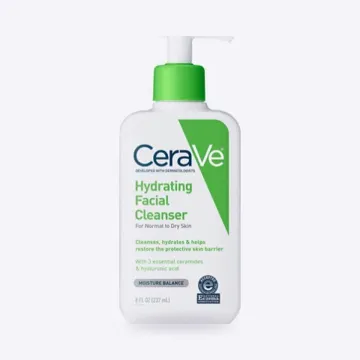
Hydrating Facial Cleanser
Creamy non-foaming wash that leaves the moisture barrier intact.
Suits: Dry, Normal, Sensitive, Combination skin
From Pori's catalogue. Amazon links carry our Associates tag: Pori earns from qualifying purchases, at no cost to you. No brand pays to be listed. Photos: Open Beauty Facts contributors, CC BY-SA 3.0.
4. Vanicream Facial Moisturizer SPF 30
Price: $13.99 for 2.5 oz at Target. Key ingredients: 19.5% zinc oxide as the only filter, with ceramides and squalane.
Who it suits: red, reactive skin that stings with chemical sunscreens. Who should skip it: deep skin tones that dislike a white cast. The catch: it is thicker than a gel and can leave a sheen. Our mineral sunscreens for sensitive skin lists lighter options.
5. The Ordinary Azelaic Acid Suspension 10%
Price: $12.20 for 30 ml on theordinary.com. Key ingredients: 10% azelaic acid in a silicone cream.
Who it suits: red bumps, and the flat pink or red marks that linger after pimples heal. Who should skip it: skin that is raw or stinging right now; repair the barrier first. The catch: it can tingle for the first week and pills over some products. Our azelaic acid roundup compares stronger versions.
6. Aquaphor Healing Ointment
Price: $6.29 for 1.75 oz at Target. Key ingredients: 41% petrolatum with mineral oil, lanolin alcohols, panthenol and glycerin.
Who it suits: windburn, a nose rubbed red by tissues, and cracked patches in cold weather. Who should skip it: anyone allergic to lanolin, and acne-prone areas. The catch: it is greasy; use a thin layer at night or on spots only.
7. Purito Seoul Wonder Releaf Centella Serum Unscented
Price: $20 for 2.02 fl oz at Target. Key ingredients: centella asiatica, niacinamide and panthenol, unscented.
Who it suits: mild, everyday pinkness in skin that already tolerates a serum. Who should skip it: anyone mid-flare, when fewer products is better. The catch: the soothing evidence for centella is mostly lab and small studies.
8. Aveeno Calm + Restore Oat Gel Moisturizer
Price: $19.97 for 1.7 oz at Walmart. Key ingredients: oat kernel extract and feverfew in a light, fragrance-free gel.
Who it suits: oily or combination skin that flushes with heat, exercise or hot drinks. Who should skip it: people allergic to plants in the daisy family, which includes feverfew. The catch: it is light, so dry skin will want more in winter.
9. EltaMD UV Physical SPF 41
Price: $50 for 3 oz on eltamd.com. Key ingredients: 9% zinc oxide and 7% titanium dioxide with a sheer tint.
Who it suits: skin that turns red in sun and heat and wants an all-mineral formula with a tint. Who should skip it: deeper skin tones, since there is one shade. The catch: the price, more than three times pick 4.
10. Dr.Jart+ Cicapair Soothing Color Correcting Treatment SPF 30
Price: $54 for 55 ml at Sephora. Key ingredients: 14.6% zinc oxide and 3.1% titanium dioxide, with centella. It goes on green and turns beige to cancel visible redness.
Who it suits: people who want redness covered on a work day. Who should skip it: deeper skin tones, where it can look gray, and fragrance-sensitive skin; check the current list. The catch: it hides redness and does nothing to its cause.
What causes red skin if it isn't rosacea?
Several common things turn a face red, and the fix depends on which one it is.
- Irritation from products. Strong acids, retinoids, scrubs, alcohol-heavy toners and fragrance can sting and redden skin within hours. Our guide to contact dermatitis on the face explains irritant and allergic reactions.
- A damaged barrier. Stinging, tightness, flaking and redness together are the classic signs. See damaged skin barrier signs for the repair plan.
- Flushing. DermNet describes flushing as temporary redness from widened blood vessels, set off by heat, exercise, alcohol, spicy food or emotion. Frequent flushing that leaves lasting redness can be early rosacea.
- Sun and wind. Sunburn and windburn both leave skin red and sore for days.
- Post-acne marks. Flat pink or red spots after pimples heal fade over months, faster with sunscreen and azelaic acid.
Our list of sensitive skin triggers covers the habits that keep skin red, such as long hot showers and rough towels.
How do you calm red, irritated skin fast?
Strip the routine back for two weeks: one gentle cleanser, one plain moisturizer and a mineral sunscreen. Pause acids, retinoids, scrubs and anything scented. The AAD recommends testing new products on a small patch of skin for several days before using them on the whole face. When skin feels normal again, add one active at a time. Some pairs are kind to red skin: niacinamide and ceramides support the barrier together, and niacinamide and azelaic acid can share a routine. To check what is already on your shelf, our ingredient checker flags fragrance and harsh actives.
See a doctor if redness itches and spreads a day or two after a new product, which suggests an allergy, if it comes with greasy scaling in the eyebrows or around the nose, or if a rash across the cheeks and nose comes with joint pain or tiredness. Our dermatologist directory can help you find one.
How we chose
We matched picks to the common non-rosacea causes of redness and screened every product against the AAD's gentle-care advice: no fragrance where possible, no alcohol-heavy formulas, and no scrubs or strong acids except for azelaic acid. We checked each ingredient list and price on the brand site or a major US retailer in November 2026 and noted where a product contains a known allergen such as lanolin. We did not test these products on skin. To follow redness in photos over time, see our redness score explainer.
Frequently asked questions
What is the best skincare for a red face?
A fragrance-free routine of a gentle cleanser, a ceramide moisturizer such as Vanicream Daily Facial Moisturizer and a mineral sunscreen. Most redness from irritation or barrier damage settles within a few weeks once triggers stop.
Why is my face red after skincare?
Usually irritation: a strong acid, retinoid, scrub, alcohol or fragrance has stressed the skin barrier. If the redness itches and spreads a day or more after a new product, it may be an allergy, which a dermatologist can confirm with patch testing.
How long does redness from a damaged barrier take to heal?
Mild irritation often calms in a few days to two weeks with a stripped-back routine. A badly damaged barrier can take several weeks, so add actives back one at a time.
Is redness always rosacea?
No. Irritation, a damaged barrier, flushing, sunburn, windburn, post-acne marks and dermatitis also cause redness. Rosacea tends to come and go on the central face with flushing, visible vessels or bumps over months.
Does green color corrector work for redness?
Green pigment cancels red visually, so a green-tinted product such as Dr.Jart+ Cicapair hides redness while you wear it. It doesn't change the cause.
Is azelaic acid good for redness?
Azelaic acid helps red bumps and lingering red marks after acne. Avoid it while skin is raw or stinging, and start every other day.
Sources
- American Academy of Dermatology: Face washing 101
- American Academy of Dermatology: How to test skin care products
- American Academy of Dermatology: Contact dermatitis overview
- Cleveland Clinic: What is your skin barrier, and how do you repair it?
- DermNet: Flushing
- Target: Vanicream Daily Facial Moisturizer 3 fl oz
- DailyMed: La Roche-Posay Cicaplast Balm B5 (Drug Facts label)
- DailyMed: Vanicream Facial Moisturizer Broad Spectrum SPF 30 drug label
- The Ordinary: Azelaic Acid Suspension 10%
- Dr. Jart+: Cicapair Soothing Color Corrector Treatment SPF 30
Pori is a wellness and skincare education app, not a medical device. This article is for general information and isn't medical advice. For anything that worries you, see a dermatologist.