Pori

- Use one gentle cleanser on the whole face, no more than twice a day.
- Put salicylic acid (BHA) only on the forehead, nose and chin, starting two or three nights a week.
- Moisturize by zone: a light oil-free gel on the T-zone, a richer cream on the cheeks.
- Wear broad-spectrum SPF 30+ daily, multi-mask once a week if you like, and adjust textures with the seasons.
A good combination skin routine treats your face by zone. Use one gentle cleanser everywhere, put a salicylic acid (BHA) product only on the oily T-zone, and choose moisturizer by area: a light gel on the forehead, nose and chin, and a richer cream on dry cheeks. Finish with broad-spectrum SPF 30 or higher every morning, and multi-mask once a week if you like masks.
Below is the full morning and evening routine, a zone-by-zone table, how to use BHA without drying out your cheeks, how multi-masking works, and how to adjust the plan between summer and winter. If you're still not sure you're combination, start with our guide to what combination skin is and how to recognize it.
Why does combination skin need a zone-based routine?
Because your face really does produce different amounts of oil in different places. Researchers who measured sebum at five sites on the face across a full year found that output on the forehead, nose and chin was higher than on both cheeks, and that the T-zone and the cheeks shifted with the seasons in different ways. The same study proposed that a mismatch between those zones in more than two seasons is close to what people describe as combination skin.
A single product strong enough to control shine on your nose is often too drying for your cheeks, and a cream rich enough for your cheeks can feel heavy on your forehead. The American Academy of Dermatology (AAD) puts the fix simply: a dermatologist it quotes tells combination-skin patients to treat their face as though it's two faces, moisturizing the dry spots and skipping the oily areas. Everything below follows from that idea. For more on why the split happens in the first place, see oily T-zone, dry cheeks.
What is the best skincare routine for combination skin?
The best routine is short: cleanse, treat the T-zone, moisturize by zone, and protect with sunscreen in the morning. Here is the version we'd start with.
Morning
- Cleanse gently, or just rinse. Wet your face with lukewarm water and apply a mild cleanser with your fingertips. The AAD advises a gentle, non-abrasive cleanser without alcohol, applied with fingertips, no scrubbing, and patting dry with a soft towel. If your cheeks feel tight, a splash of water in the morning and a proper cleanse at night is fine.
- Moisturize by zone. A light gel or lotion on the T-zone, a cream on the cheeks. Some people skip moisturizer on the nose entirely.
- Sunscreen. Choose a broad-spectrum sunscreen with SPF 30 or higher and apply it to your whole face, oily zones included.
Evening
- Cleanse. The same gentle cleanser. Remove all makeup before bed; the AAD's oily-skin advice says never to sleep in your makeup.
- BHA on the T-zone only, two or three nights a week to start (more on this below).
- Moisturize by zone again, with the cream going on the cheeks and anywhere that feels tight.
That's five products at most: one cleanser, one BHA, two moisturizers and one sunscreen. Many people manage with four by using a single lightweight moisturizer everywhere and adding a second layer of it, or a few drops of a richer cream, only on the cheeks.
What does a zone-by-zone routine look like?
The table below shows which step goes where. Think of the T-zone as your forehead, nose and chin, and the cheeks as the outer areas of your face, including the jawline if it tends to be dry.
| Step | T-zone (forehead, nose, chin) | Cheeks | How often |
|---|---|---|---|
| Cleanser | Gentle cleanser, foaming is fine | Same cleanser, rinse well | Up to twice a day and after sweating |
| Exfoliant | Salicylic acid (BHA), 0.5% to 2% | Usually none, or a much lighter touch | Start 2 to 3 evenings a week |
| Moisturizer | Oil-free gel or light lotion, or none on the nose | Cream with glycerin or hyaluronic acid | Morning and evening |
| Sunscreen | Broad-spectrum SPF 30+, oil-free or matte finish | Same sunscreen | Every morning |
| Mask (optional) | Clay or charcoal mask sold for oily skin | Hydrating or cream mask | Once a week |
Which cleanser should I use for combination skin?
Use one mild cleanser for the whole face, and judge it by how your cheeks feel afterward. A shiny forehead tempts people toward strong, squeaky-clean washes, but the AAD notes that a face wash that is too harsh can irritate your skin and trigger increased oil production. Its oily-skin guidance recommends a gentle foaming wash and warns against oil-based or alcohol-based cleansers.
If your cheeks feel tight within a few minutes of washing, try a creamier or lower-foam cleanser. Wash no more than twice a day, plus after heavy sweating. Washing more often doesn't make an oily T-zone less oily, and it does make dry cheeks drier.
How do I use BHA on just my T-zone?
Apply your salicylic acid product with fingertips or a cotton pad to the forehead, nose and chin only, and stop where the shine usually stops. That's where shine and clogged pores cluster, so that's where the acid earns its place. The AAD lists salicylic acid, glycolic acid and lactic acid as ingredients that can help reduce oiliness, while warning they can be too harsh; if your skin gets irritated, use the product less often or stop.
A few practical points:
- Strength. Over-the-counter acne products in the US can contain salicylic acid from 0.5 to 2 percent under the FDA's acne monograph. Leave-on toners and serums for the T-zone often sit in that range; check the label.
- Frequency. Start two or three evenings a week and build up only if your skin stays comfortable. DermNet notes that mild stinging can occur and that salicylic acid can irritate healthy skin, so it should stay on the area being treated. Stinging that lingers is the signal to back off.
- Patch test first. The AAD suggests applying a new product to a quarter-sized spot, such as the bend of your elbow, twice a day for seven to 10 days before using it on your face. Our patch testing guide walks through it.
- Protect the edges. If the skin around your nose gets flaky, you've drifted into dry territory. Pull the BHA back and put moisturizer there instead.
For a closer look at how BHA clears pores, read salicylic acid for blackheads.
What is the best moisturizer for combination skin?
For most people it's two textures, a gel or light lotion for the T-zone and a cream for the cheeks, or one light moisturizer layered more heavily where you're dry. The AAD explains the difference between them: a gel is often water-based and feels lighter than a lotion, while a cream is thicker, has more oil and is more hydrating.
For the oily zone, look for labels that say oil-free and noncomedogenic. The AAD says those labels mean a product, including cleansers, moisturizers and makeup, won't clog your pores or cause acne. For the cheeks, a cream does more, because it holds more oil and hydrates better than a gel. The AAD's moisturizer guide advises applying moisturizer right after you get out of the shower, while skin is damp, so it traps water in the skin.
If you'd rather own a single moisturizer, pick a light lotion and use it this way: one thin layer over the whole face, then a second layer on the cheeks. That gets you most of the benefit of two products with half the shelf space.
What is multi-masking, and is it worth it?
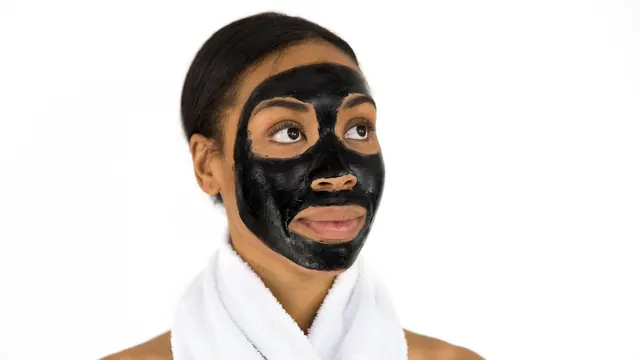
Multi-masking means putting different face masks on different zones at the same time, usually an oil-targeting clay mask on the T-zone and a hydrating mask on the cheeks. It's the zone idea applied to masks, and for combination skin it makes more sense than spreading one clay mask over dry cheeks.
- Cleanse and pat dry.
- Apply the clay or charcoal mask to the forehead, nose and chin. Keep it away from the eye area and the cheeks.
- Apply a hydrating or cream mask to the cheeks and any dry patches.
- Rinse after the time on each label. Clay masks often have a shorter wear time than hydrating ones, so you can rinse the T-zone first.
- Follow with your usual zone-by-zone moisturizer.
Masks are optional. They're a once-a-week extra, and the daily routine above does the real work. Skip the clay mask on any night you've used BHA, so the T-zone isn't getting two drying steps in a row.
Do I need a different routine for combination skin with acne?
Often, a small adjustment is enough. If breakouts cluster in the T-zone, the BHA step already targets the right area. Keep every product oil-free and noncomedogenic, and for sunscreen the AAD suggests that people prone to breakouts look for zinc oxide and titanium dioxide and avoid sunscreens with fragrance or oils. If you have red, inflamed pimples on the cheeks as well, or breakouts that don't settle after several weeks, the routine is now an acne routine, and an active such as benzoyl peroxide or adapalene, or a visit to a dermatologist, is the next step.
How should a combination skin routine change with the seasons?
Expect your T-zone to get oilier in summer and your cheeks to get drier in winter, and adjust textures instead of rebuilding the routine. The year-long sebum study found summer was the highest sebum-secreting season, with seasonal changes in both the T-zone and the cheek area.
- Summer: a gel moisturizer may be enough everywhere, or a moisturizer with SPF in the morning. Blotting papers help midday; the AAD advises pressing the paper gently for a few seconds instead of rubbing.
- Winter: move the cheeks to a richer cream, cut BHA nights back by one, and watch for dry patches spreading toward the nose.
If your face behaves the same way year-round, you may lean closer to oily or dry than to true combination. Re-test your skin type when the seasons turn.
How can a selfie scan or ingredient scanner help with combination skin?
Combination skin is hard to judge in a mirror because you're looking at two different faces at once. Pori reads a selfie region by region using a 468-point face mesh and returns an overall skin score plus breakdowns including Hydration & Moisture and Pores & Texture, so you can track whether a change is moving those scores over a few weeks, alongside your own notes on how your T-zone and cheeks feel. Our explainer on face zones in skin analysis covers how per-area reading works.
Pori's ingredient scanner, part of Pro, reads a product's barcode or a photo of its label and flags each ingredient as beneficial, use with caution or avoid for your skin type, which is useful when you're checking whether a cream for your cheeks is too rich for your nose. As of October 2026, Pori is a free download with a free first scan; Pro costs $9.99 a week with a 3-day trial for eligible Apple IDs, or $49.99 a year in the US. It runs on iPhone with iOS 17 or later.
An app reads how your skin looks. It isn't a diagnosis, so see a dermatologist for persistent redness, flaking that doesn't respond to moisturizer, or acne that leaves marks.
Frequently asked questions
What is the best skincare routine for combination skin?
Use one gentle cleanser on the whole face, salicylic acid only on the oily T-zone a few nights a week, a light gel moisturizer on the T-zone and a richer cream on the cheeks, and broad-spectrum SPF 30 or higher every morning.
Should I moisturize my T-zone if it's oily?
Use a light, oil-free gel there, or skip it on the nose if that area never feels dry. The AAD suggests treating combination skin like two faces: moisturize the dry spots and skip the oily areas.
Can I use salicylic acid on my whole face if I have combination skin?
You can if your cheeks tolerate it, but most combination skin does better with BHA only on the forehead, nose and chin. If your cheeks get tight, flaky or start to sting, keep the acid in the T-zone.
What is multi-masking?
Multi-masking means applying different masks to different areas at once, such as a clay mask on the T-zone and a hydrating mask on the cheeks. It's an optional weekly step, not a replacement for daily cleansing and moisturizing.
Is a gel or cream moisturizer better for combination skin?
Usually both: gel for the oily T-zone and cream for dry cheeks. If you only want one product, choose a light lotion and apply a second layer to the cheeks.
Why is my combination skin oilier in summer?
Sebum output rises in warm months; a year-long study found summer was the highest oil-producing season for facial skin. Switch to lighter textures in summer and richer ones on the cheeks in winter.
Sources
- Youn SW et al. Regional and seasonal variations in facial sebum secretions: a proposal for the definition of combination skin type. Skin Res Technol, 2005 (PubMed)
- American Academy of Dermatology: How to pick the right moisturizer for your skin
- American Academy of Dermatology: How to control oily skin
- American Academy of Dermatology: Face washing 101
- American Academy of Dermatology: How to select a sunscreen
- American Academy of Dermatology: How to test skin care products
- 21 CFR 333.310: Acne active ingredients (Cornell LII)
- DermNet: Salicylic acid
Pori is a wellness and skincare education app, not a medical device. This article is for general information and isn't medical advice. For anything that worries you, see a dermatologist.