Pori

- La Roche-Posay belongs to L'Oréal; Avène belongs to Pierre Fabre, which is owned by a French foundation.
- Both waters have mostly company-run research behind them; choose on the rest of the formula.
- La Roche-Posay is cheaper for cleansers and moisturizers and far stronger on acne treatments and sunscreen choice.
- Avène suits very reactive skin that needs short ingredient lists, very dry or itchy skin, and people who want mineral-only SPF.
Avène and La Roche-Posay are both French pharmacy brands built on thermal spring water and made for sensitive skin. La Roche-Posay, owned by L'Oréal, has the bigger US range, real acne treatments and more sunscreen choices, usually at lower prices for the basics. Avène, owned by the foundation-controlled Pierre Fabre group, is the pick for very reactive skin that does best on short ingredient lists, and its US sunscreens are mineral.
Whichever bottle you pick up, you can scan its barcode or label with the ingredient scanner in Pori to check it against your skin type. Pori reads the ingredient list for you; it does not diagnose skin conditions.
Below we compare the two brands on ownership, spring water, sensitive-skin lines, cleansers, moisturizers and sunscreen. We compared published ingredient lists, brand claims and listed prices; we did not test these products on skin. Prices are US list prices at Ulta as of November 2026 unless another retailer is named. Sizes differ a lot between the brands, so check price per ounce.
Who owns Avène and La Roche-Posay?
La Roche-Posay belongs to L'Oréal, which bought it in 1989, according to Cosmetics Business. It sits in L'Oréal Dermatological Beauty with CeraVe, Vichy and SkinCeuticals. Our CeraVe vs La Roche-Posay comparison covers its sister brand.
Avène belongs to Pierre Fabre, a French pharmaceutical and dermo-cosmetics group founded in 1962 and owned by the Fondation Pierre Fabre, a public-interest foundation. Pierre Fabre bought the Avène spa in 1975, and the skincare brand launched in 1990 when the hydrotherapy center reopened, according to Avène's history page. So one brand is part of L'Oréal, and the other belongs to an independent group with no stock-market shareholders. Our full brand guides cover Avène and La Roche-Posay in more depth.
Is there a real difference between the two spring waters?
Each brand puts its own spring water first on most labels, and each has published research on it.
- La Roche-Posay describes its water as rich in selenium, an antioxidant trace mineral. A 2013 review of its soothing effects was written by a La Roche-Posay scientist and said more research was needed.
- Avène points to a bacterium found in its spring, Aquaphilus dolomiae. A 2016 cell study by Pierre Fabre scientists found an extract of it calmed inflammatory signals in skin cells, and Avène now adds a filtrate of it to products such as Cicalfate+ and Tolerance Control.
Both bodies of research come mainly from the companies themselves, and we found no head-to-head study of the two waters. Choose on the rest of the formula. The proven work in both ranges is done by familiar ingredients such as glycerin, niacinamide, ceramide NP, panthenol, oils and approved UV filters.
Which is better for sensitive skin, Avène Tolerance or La Roche-Posay Toleriane?
| Product | What it is | Key ingredients | Price (Nov 2026) |
|---|---|---|---|
| Avène Tolerance Control Soothing Skin Recovery Cream | Minimal-ingredient cream for very reactive skin | 15 ingredients: spring water, squalane, glycerin, beeswax, Aquaphilus dolomiae filtrate; no fragrance or conventional preservative listed | $40 for 1.3 oz |
| La Roche-Posay Toleriane Double Repair Face Moisturizer | Light daily moisturizer for normal to dry sensitive skin | Ceramide NP, niacinamide, glycerin; fragrance-free | $25.99 for 3.38 oz |
| Avène Cicalfate+ Restorative Protective Cream | Thick protective cream for irritated or chapped skin | Mineral oil, zinc oxide, copper and zinc sulfates; fragrance-free | $26 for 1.3 oz |
| La Roche-Posay Cicaplast Baume B5 | Multi-purpose balm for dry or irritated patches | Panthenol, shea butter, glycerin, madecassoside; fragrance-free | About $18 to $21 for 1.3 oz |
The two everyday creams take different approaches. Tolerance Control keeps the list short, which helps if you react to many ingredients and are trying to find out which ones. Toleriane Double Repair adds active barrier ingredients, ceramide NP and niacinamide, and costs far less per ounce. If your skin is sensitive but not reactive to everything, Toleriane is the better value. If even simple moisturizers sting, Tolerance Control is worth trying.
For irritated patches, Cicalfate+ and Cicaplast Baume B5 do similar jobs. Cicalfate+ leans on mineral oil and zinc oxide, and Cicaplast on panthenol and shea butter. Both are thick and best used on the spots that need them. Our damaged skin barrier guide explains when to reach for one.
Which cleanser is better, Avène or La Roche-Posay?
| Cleanser | Skin type | Fragrance | Price (Nov 2026) |
|---|---|---|---|
| La Roche-Posay Toleriane Hydrating Gentle Cleanser | Normal to dry, sensitive | None listed | $21.99 for 13.5 oz |
| La Roche-Posay Toleriane Purifying Foaming Cleanser | Normal to oily, sensitive | None listed | $19.99 for 13.5 oz |
| Avène Cleanance Cleansing Gel | Oily, blemish-prone | Contains fragrance | $23 for 6.7 oz |
| Avène XeraCalm A.D Lipid-Replenishing Cleansing Oil | Very dry, itchy, eczema-prone | Fragrance-free | Varies by size |
For most people, La Roche-Posay's Toleriane cleansers are the better buy. They are fragrance-free, contain ceramide NP and niacinamide, and come in bigger bottles for less money. The Hydrating Cleanser also carries the National Eczema Association Seal of Acceptance. Our Toleriane Hydrating Cleanser review goes into the formula.
Avène wins in two niches. XeraCalm Cleansing Oil is a soap-free, fragrance-free oil for face and body that suits very dry, itchy skin, especially if you wash in the shower. Cleanance Cleansing Gel is a pleasant soap-free gel for oily skin, though its fragrance makes Toleriane Purifying the safer pick if your skin is also reactive.
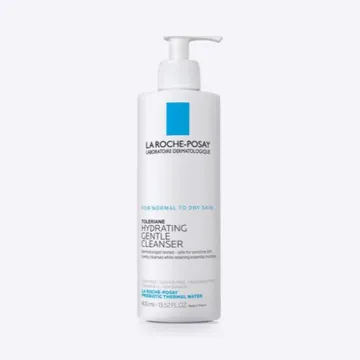
Toleriane Hydrating Gentle Cleanser
Milky cleanser built for reactive, tight-feeling skin.
Suits: Dry, Sensitive, Normal skin
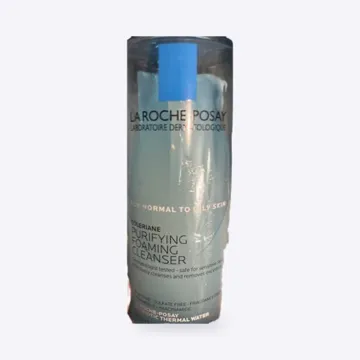
Toleriane Purifying Foaming Cleanser
Foaming wash for oily skin that still reacts to strong cleansers.
Suits: Oily, Combination, Sensitive skin
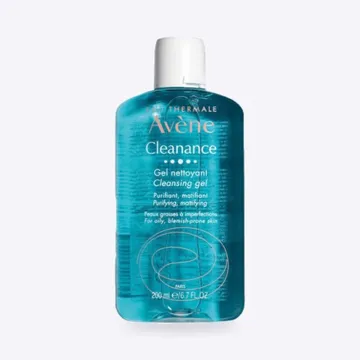
Cleanance Cleansing Gel
Face cleanser.
Suits: Normal, Dry, Oily, Combination skin
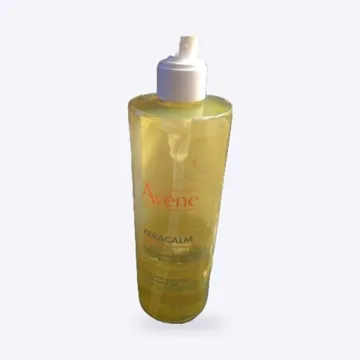
Xeracalm Lipid-Replenishing Cleansing Oil
Face cleanser with glycerin and tocopherol. Fragrance-free.
Suits: Normal, Dry, Oily, Combination, Sensitive skin
From Pori's catalogue. Amazon links carry our Associates tag: Pori earns from qualifying purchases, at no cost to you. No brand pays to be listed. Photos: Open Beauty Facts contributors, CC BY-SA 3.0.
Which is better for acne, Avène Cleanance or La Roche-Posay Effaclar?
La Roche-Posay, clearly, if you have active breakouts. Its Effaclar line covers the three main over-the-counter acne drugs: 2% salicylic acid in the Medicated Gel Cleanser, benzoyl peroxide in the Acne Face Wash and BPO treatment, and adapalene 0.1% in Effaclar Adapalene Gel ($43.99). Our guides to adapalene and benzoyl peroxide explain how to start.
Avène's Cleanance products are cosmetics for oily, blemish-prone skin. They rely on ingredients such as Comedoclastin, a milk thistle extract, and zinc gluconate, which have far less evidence than the OTC acne drugs. Cleanance makes sense as the gentle cleanser and moisturizer around a proven acne treatment, from either brand.
Which moisturizer and sunscreen is better?
| Product | UV filters | Fragrance | Price (Nov 2026) |
|---|---|---|---|
| La Roche-Posay Toleriane Double Repair UV SPF 30 | Avobenzone 3%, homosalate 5%, octisalate 5%, octocrylene 7% | None listed | $28.99 for 3.38 oz |
| La Roche-Posay Anthelios Melt-in Milk SPF 60 | Avobenzone 3%, homosalate 10%, octisalate 5%, octocrylene 7% | None added | $28.99 for 3 oz |
| Avène Mineral Multi-Defense Fluid Tinted SPF 50+ | Zinc oxide 12% | Formulated without fragrance | $38 for 1.3 oz |
| Avène Mineral Ultra-Light Hydrating Lotion SPF 50 | Titanium dioxide 4%, zinc oxide 6% | Check label | Varies by retailer |
If you want one morning product that moisturizes and protects, Toleriane Double Repair UV SPF 30 is the simpler and cheaper choice. Our Double Repair UV review covers it in detail. If chemical filters sting your eyes or skin, Avène's tinted mineral fluid relies on zinc oxide, and the tint softens the white cast. It costs more per ounce. La Roche-Posay also sells mineral Anthelios formulas; our best mineral sunscreen for sensitive skin guide compares options.
For hydration, La Roche-Posay's Hyalu B5 serum is popular, but it lists fragrance and alcohol denat. and costs $42.99 for 1 oz. A plain moisturizer with glycerin does most of the same work for less.
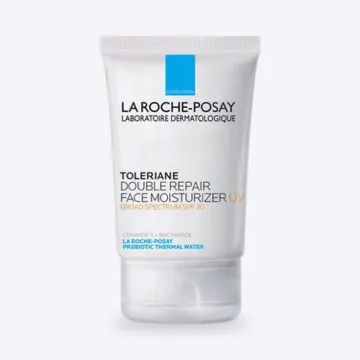
Toleriane Double Repair Face Moisturizer UV SPF 30
SPF 30 sunscreen with niacinamide, avobenzone and homosalate. Fragrance-free.
Suits: Normal, Dry, Oily, Combination, Sensitive skin
From Pori's catalogue. Amazon links carry our Associates tag: Pori earns from qualifying purchases, at no cost to you. No brand pays to be listed. Photos: Open Beauty Facts contributors, CC BY-SA 3.0.
Why are US Avène and La Roche-Posay sunscreens different from Europe?
US sunscreens are regulated as over-the-counter drugs, and for decades the FDA permitted a shorter list of UV filters than Europe. That is why the same brand can sell very different formulas on each side of the Atlantic.
- Avène in Europe uses filters not sold in US sunscreens. Pierre Fabre's own patented filter, TriAsorB, launched around 2021. The European Cleanance Comedomed+ SPF 30 combines Tinosorb S, Uvinul A Plus and Uvasorb HEB, according to its Vidal listing.
- La Roche-Posay took a different route in 2006, when the FDA approved its Anthelios SX through a new drug application with ecamsule (Mexoryl SX), avobenzone and octocrylene, as reported at the time.
- The rules are starting to change. In June 2026 the FDA added bemotrizinol (Tinosorb S) to the list of permitted sunscreen ingredients at up to 6%, the first new filter in more than 20 years. Products with it will take time to reach US shelves, and filters such as Uvinul A Plus are still not permitted.
Our guide to chemical sunscreen filters explains what each US filter does. A sunscreen you like enough to wear every day matters more than which filters it uses.
Who should pick Avène, and who should pick La Roche-Posay?
- Pick La Roche-Posay if you want the better value on cleansers and moisturizers, have acne that needs salicylic acid, benzoyl peroxide or adapalene, or want a wide choice of chemical and mineral sunscreens.
- Pick Avène if your skin reacts to almost everything and you want very short ingredient lists, if you have very dry or itchy skin that suits an oil cleanser, or if you prefer a mineral-only sunscreen.
- Mix them if it suits you. A Toleriane cleanser, Avène Tolerance Control at night and a sunscreen from either brand work fine together. Add one new product at a time and patch test it first.
Frequently asked questions
Are Avène and La Roche-Posay the same company?
No. La Roche-Posay belongs to L'Oréal, which bought it in 1989. Avène belongs to Pierre Fabre, a French group owned by the Fondation Pierre Fabre.
Which is better for sensitive skin, Avène or La Roche-Posay?
Both suit sensitive skin. La Roche-Posay's Toleriane range is cheaper and adds ceramide NP and niacinamide. Avène's Tolerance Control cream has a very short ingredient list, which helps if your skin reacts to many ingredients.
Is Avène thermal water better than La Roche-Posay thermal water?
There is no head-to-head study. Each brand has published research on its own water, mostly company-run. Choose products by their other ingredients, which do most of the work.
Which brand is better for acne?
La Roche-Posay. Its Effaclar line includes salicylic acid, benzoyl peroxide and adapalene, the main OTC acne drugs. Avène's Cleanance products are gentle cosmetics that work best alongside a proven acne treatment.
Are Avène sunscreens mineral in the US?
The Avène sunscreens we found at US retailers use zinc oxide, alone or with titanium dioxide. In Europe, Avène also sells sunscreens with newer filters that are not permitted in US products.
Is La Roche-Posay cheaper than Avène?
Usually, for the basics. Toleriane cleansers cost about $20 to $22 for 13.5 oz, while Avène's Cleanance Gel costs $23 for 6.7 oz, and Toleriane Double Repair Moisturizer costs less per ounce than Tolerance Control.
Sources
- Cosmetics Business: Something in the water for La Roche-Posay
- Pierre Fabre: Our company
- Eau Thermale Avène UK: Thermal spring water history
- Seite S. Thermal waters as cosmeceuticals: La Roche-Posay thermal spring water example. Clin Cosmet Investig Dermatol, 2013
- Aries MF et al. Anti-inflammatory and immunomodulatory effects of Aquaphilus dolomiae extract. Clin Cosmet Investig Dermatol, 2016 (PMC)
- Ulta Beauty: Avène Tolerance Control Skin Recovery Cream (price and ingredients)
- Ulta Beauty: Avène Mineral Sunscreen Multi-Defense Fluid Tinted SPF 50+
- DailyMed (NLM): La Roche-Posay Toleriane Double Repair Moisturizer UV SPF 30 drug label
- Practical Dermatology: FDA adds bemotrizinol to OTC sunscreen monograph (June 2026)
- News-Medical: New OTC sunscreen product approved by FDA (Anthelios SX, 2006)
Pori is a wellness and skincare education app, not a medical device. This article is for general information and isn't medical advice. For anything that worries you, see a dermatologist.